Key Takeaways
- Core Purpose: Kansei Engineering (KE) translates user emotional responses, sensations, and expectations into concrete design parameters and technical specifications.
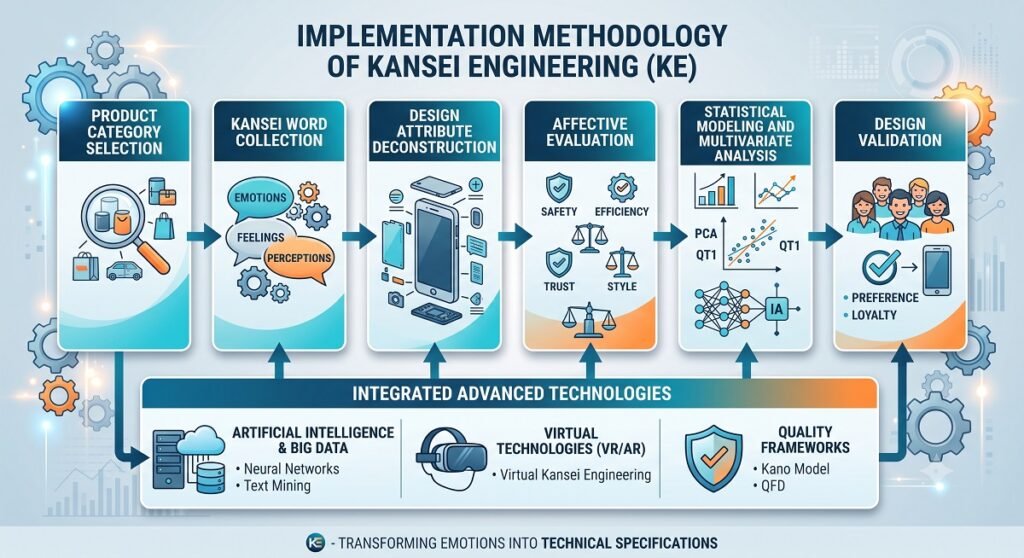
- Methodological Roadmap: It encompasses six structured phases: category selection, Kansei word capture, attribute deconstruction, affective evaluation, multivariate modeling (PCA, QT1, AI), and final validation.
- Multisectoral Application: It has a significant impact on automotive design (Mazda’s Zoom-Zoom philosophy, ICV/NEV vehicles), consumer electronics (intuitive smartphones), services and architecture (hospitality and university classrooms), and interactive digital advertising.
- Key Challenges: Challenges include quantifying complex, culturally sensitive emotions; lack of universal standardization; potential constraints on disruptive innovation from rigid morphological frameworks; small sample sizes with high biometric validation costs (eye-tracking, EEG); and black-box opacity in deep learning models.
- Technological Convergence and Trends:
- AI & Big Data: Integration of neural networks, genetic algorithms, text mining in online reviews, and Support Vector Regression (SVR).
- Quality Management: Strategic synergy with the Kano Model, QFD, SERVQUAL, AHP, and FCE.
- Immersive Environments: Adoption of “Virtual Kansei Engineering” (VR/AR) to evaluate attributes without physical prototypes.
- Hybrid & Dynamic Models: Implementation of Hybrid Kansei Engineering (HKE), continuous affective data analysis in smart products, and real-time service hyper-personalization.
In today’s competitive market, companies constantly seek innovative ways to develop products and services that resonate with their target audience and ensure higher satisfaction. Facing this challenge, Kansei Engineering—a user-centered design methodology—has established itself as a key tool for connecting with consumers.
Nowadays, customers do not evaluate only rational attributes like functionality, usability, safety, or price. Their purchasing decisions rely increasingly on subjective factors and the emotional impact generated by the brand (López et al., 2021). In this context, when combined with various methodologies, Kansei Engineering makes it possible to accurately decipher these sensations, apply them across multiple aspects of daily life, and perfect the user experience (Lin et al., 2021).
Ultimately, the fundamental purpose of Kansei Engineering is to translate affective impressions into concrete design parameters, ensuring that every product is as functional as it is appealing. In this article, we will thoroughly explore its principles, methodology, real-world success cases, and synergy with other innovation tools.
What is Kansei Engineering? Emotion-Driven Design
Kansei Engineering, also known as “affective engineering” or “emotional design,” is a methodology focused on capturing consumers’ emotional responses toward products to precisely guide every design decision. Created by Professor Mitsuo Nagamachi in the 1970s, this discipline has evolved into an essential pillar of user-centered design.
According to Nagamachi (1995), this methodology originated as a consumer-oriented technology for developing new concepts, defining it as “the technological translation of a person’s feelings and images regarding a product into concrete design elements.”
In the same vein, Hakim et al. (2024) highlight that Kansei Engineering is fundamental for conceiving products that integrate functionality, usability, and emotional satisfaction—indispensable pillars for commercial success. Furthermore, it not only deciphers the user’s perceptual expectations, but also optimizes development processes and significantly reduces production costs by minimizing error margins (Xue et al., 2020).
Ingeniería Kansei vs. Kansei Engineering: Origin and Evolution of the Term
The Japanese term Kansei (感性) predates the methodology itself. Its application in modern Japan to define aesthetic sensitivity dates back to 1878, when philosopher Amane Nishi used it to adapt Western aesthetic concepts to the local context. Decades later, the Kyoto School—led by Kitaro Nishida—deepened the philosophical understanding of “pure experience” (junsui keiken), establishing that sensory perception and emotion precede any rational judgment.
It was in the 1970s that Professor Mitsuo Nagamachi, from Hiroshima University, transformed this philosophical background into a technical discipline applicable to product design: Kansei Engineering. Although both terms are used interchangeably in Spanish and English, the conceptual root and Japanese perceptual essence remain exactly the same.
Understanding Affective Engineering: The Psychology Behind Product Design
Kansei Engineering stems from a fundamental premise: consumers’ purchasing decisions are often driven by emotional impulses rather than purely logical or functional evaluations. This methodology recognizes that every product evokes deep feelings and perceptions in the user, seeking to channel these affective responses to conceive truly appealing, desirable, and memorable solutions.
Fundamental Principles of Kansei Engineering
This discipline is governed by several strategic pillars that conceptually distinguish it from traditional design approaches:
Focus on Human Emotion (Kansei)
The guiding principle of Kansei Engineering establishes that a product or service must not only meet functional criteria, but also evoke positive emotions and connect with the consumer’s psychological expectations (Hartono & Parung, 2026). Within this framework, the term Kansei refers to the user’s subjective perception, manifested through sensations, impressions, and affective states (Lu et al., 2024). Thus, the methodology captures these abstract and diffuse feelings—such as perceiving something as “elegant,” “authentic,” or “tech-forward”—to translate them into concrete, objective, and quantifiable design parameters (Lu et al., 2024; Liu & Song, 2025).
Interdisciplinary Integration and Problem Solving
According to Lu et al. (2024), Kansei Engineering establishes a dynamic balance between scientific and technological rigor and the creative design process. To achieve this, fields such as engineering, design, ergonomics—or human factors—and psychology converge (Yohanny et al., 2025; Hartono & Parung, 2026). Furthermore, Lu et al. (2024) emphasize that, to ensure the success of this approach, the methodology revolves around the interaction of three key actors (the product, the user, and the designer) and addresses three fundamental scientific challenges:
- Building a Decision Model: Formulating mathematical and engineering models that establish the precise correlation between the user’s affective responses and design parameters.
- Deconstructing Product Features: Analyzing and breaking down the product into its physical attributes and specific properties, such as contours, color palettes, materials, and proportions.
- Quantifying User Kansei: Measuring and structuring the representation of consumer emotions through rigorous sensory evaluation methods.
Structured Methodological Implementation of Kansei Engineering
In practice, according to Yohanny et al. (2025), the principles of Kansei Engineering are deployed through a systematic procedure encompassing the following key stages:
- Determination of Product Domain: Accurately identifying the design object, its context of use, and the target audience (Núñez et al., 2026).
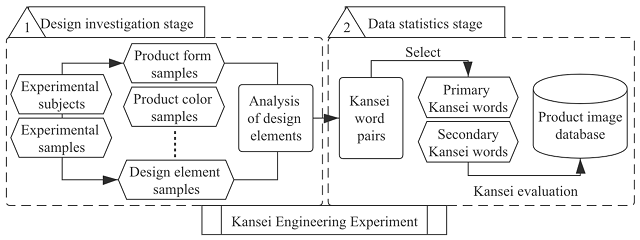
- Definition of Semantic Space: Gathering “Kansei words”—a set of adjectives (such as “comfortable,” “luxurious,” or “modern”) that describe consumer affective responses—which are filtered and structured using tools like semantic differential scales.
- Determination of Product Properties: Defining the components and categories that comprise the physical design or service elements susceptible to modification.
- Data Synthesis and Analysis: Applying advanced statistical methods (such as Principal Component Analysis or Quantification Theory) or artificial intelligence algorithms (neural networks and genetic algorithms) to correlate which specific physical attribute triggers a particular user emotion (Chang et al., 2025). Hartono and Parung (2026) note that this approach marks a transition from traditional surveys toward advanced analytics, including text mining, sentiment analysis, machine learning, and Big Data.
- Evaluation and Validation: Testing and validating optimal design solutions to confirm that the selected parameters fulfill the intended emotional purpose. According to Chang et al. (2025), in advanced phases (such as Hybrid KE), this process is enriched with objective metrics like Eye Tracking and physiological measurements.
The 5 Types of Kansei Engineering: From Traditional Evaluation to Hybrid Models
Not all applications of Kansei Engineering follow the same methodology. Although Nagamachi (1995) initially identified three approaches, Zhu et al. (2025) distinguish five main variants, structured from the most accessible to the most advanced:
- Traditional Kansei Engineering: Relies on surveys, expert criteria, and user feedback to capture emotions and guide development. While efficient for simple products, it lacks a rigorous validation mechanism to evaluate whether these perceptions translate accurately into highly complex objects.
- Fuzzy Kansei Engineering (FKE): Emerges to resolve ambiguity in consumer demands by using fuzzy logic and fuzzy rules to structure user requirements into understandable formats, increasing data collection precision.
- Collaborative Kansei Engineering (CKE): Aims to enhance design accuracy by integrating multiple stakeholders (designers, users, interest groups, and specific segments like older adults or people with disabilities), actively involving them in decision-making.
- Virtual Kansei Engineering (VKE): Incorporates Virtual Reality (VR) to analyze the relationship between product features and audience expectations, making it ideal for measuring, predicting, and analyzing emotional reactions toward future prototypes.
- Hybrid Kansei Engineering (HKE): Designed to maximize objectivity in complex products through a two-way validation mechanism combining subjective and objective methods, articulated into two subsystems:
- Forward Kansei Engineering (FKE): Starts from the user’s perceptual vocabulary or image words to guide conceptualization and generate initial design proposals.
- Backward Kansei Engineering (BKE): Represents the validation phase, applying quantitative metrics or experimental techniques (such as eye-tracking) to scientifically verify initial assessments.
Identifying which category aligns with your project is the fundamental first step before drafting the data collection instrument.
Applications of Kansei Engineering: From Physical Products to User Experience
Kansei Engineering is a highly versatile methodology that has expanded beyond its roots in physical product design to embrace industries such as services, digital environments, and fashion. Its main fields of application are structured across the following key areas:
Vehicle and Transportation Design
The transportation sector pioneered the implementation of Kansei Engineering and remains one of its largest research domains (Lu et al., 2024). Key applications include:
- Automobiles: Lu et al. (2024) report the optimization of exterior design (such as front grilles in electric vehicles to convey innovation or safety) and interiors (steering wheels, dashboards, and seats).
- Trains: Interior design of private compartments and seating for economy and luxury trains, aimed at evoking positive affective responses like “comfort” or “exclusivity” (Yohanny et al., 2025).
- Aerospace: Passenger cabin configuration (lighting, color palettes, and seat ergonomics) to mitigate stress, cockpit optimization for safety, and aerodynamic design of unmanned aerial vehicles or drones (Lu et al., 2024).
- Watercraft and Alternative Mobility: Conceptual development of boats, yachts, and living modules on offshore platforms, along with aesthetic customization of traditional and electric bicycles.
Services Sector
According to Hartono and Parung (2026), over the past decade, Kansei Engineering has been solidly integrated into the service sector to elevate experience quality, foster brand loyalty, and ensure customer emotional satisfaction. Its primary application areas encompass:
- Hospitality and Tourism: Service design in luxury hotels, fine dining, and airport VIP lounges to create memorable experiences.
- Logistics and Distribution: Process optimization for home deliveries, cross-border logistics, and international express shipping.
- Healthcare and Medical Care: Development of digital health solutions—such as telemedicine, patient platforms, and emotional well-being apps—where the discipline helps make virtual interactions more empathetic, trustworthy, and humanized.
- Other Service Environments: Strategic implementation across airlines, retail, and higher education.
Fashion, Textiles, and Sustainable Materials
The versatility of Kansei Engineering enables its strategic application within the fashion, textile, and sustainable materials sectors. Key implementations are outlined below:
- Traditional and Cultural Heritage Apparel: Used to revitalize and modernize historical garments, such as the Malaysian Nyonya Kebaya, Hanfu, or Cheongsam. This approach adapts key elements—such as patterns, embroidery, and silhouettes—to resonate with younger audiences while preserving cultural authenticity (Guo et al., 2026).
- Contemporary Fashion: Aesthetic development and optimization of garments, including bras, jackets, coats, men’s shirts, and women’s suits (Guo et al., 2026).
- Sustainable Materials: Creation and refinement of “bio-leather” alternatives, such as optimizing birch bark to conceive eco-friendly fashion items (modular bags, wallets, and biodegradable footwear) that stand out for their tactile and visual appeal (Liu & Song, 2025).
Digital Environments, Advertising, and Culture
In recent years, the application of Kansei Engineering has expanded significantly into digital advertising, interactive environments, and the cultural sector. Its most prominent implementations are grouped into the following areas:
- Digital Advertising: Generation of interactive advertising content and dynamic ads for e-commerce. The methodology adjusts animation and visual design parameters to maximize emotional resonance and brand recall (Chang et al., 2025).
- Intelligent Systems and Platforms: According to Hartono and Parung (2026), Kansei Engineering is applied in developing social and service robots, recommendation engines for e-commerce (e.g., in athletic footwear), and data analytics through text mining of online reviews.
- Cultural Sector and Museums: López and González (2026) report the use of Kansei Engineering in designing inclusive mobile applications for cultural spaces (such as the Helga de Alvear Museum). The discipline facilitates accessible interfaces that address the user’s emotional state, optimizing interaction for individuals with sensory, cognitive, or motor diversity.
Complex Industrial and Consumer Products
According to Chang et al. (2025), beyond fast-moving consumer goods and everyday items (such as bottles, furniture, electronic scales, or home appliances), Kansei Engineering is applied to the design and evaluation of high-complexity goods. This includes heavy industrial machinery—such as electric forklifts—and auxiliary surgical medical equipment, where the design architecture must balance technical rigor with the operator’s perceptual experience (Zhu et al., 2025).
Strategic Benefits of Kansei Engineering
Kansei Engineering offers decisive strategic advantages in product and service development by articulating a rigorous balance among science, human emotion, and commercial viability. Its main benefits include:
- Translating Subjectivity into Objective Parameters: The greatest value of this methodology lies in its ability to convert emotions, vague perceptions, and affective responses into concrete, quantifiable, and actionable design specifications (Chang et al., 2025). This establishes a unified language that streamlines communication, evaluation, and decision-making among engineers, designers, and executive management teams.
- Optimizing Experience, Satisfaction, and Loyalty: According to Hartono and Parung (2026) and López and González (2026), by ensuring that a product or service connects at a deep emotional level—and not merely a functional one—the discipline generates memorable experiences. This translates into increased customer satisfaction, greater organic word-of-mouth recommendations, and strong brand loyalty (Hartono & Parung, 2026).
- Enhancing Competitiveness and Commercial Success: Aligning development with the market’s affective expectations significantly elevates the perceived value of design (Kang, 2024; Chang et al., 2025). As a result, organizations boost their sales, improve return on investment, and accelerate the success rate of launching new solutions (López & González, 2026).
- Reducing Costs, Lead Times, and Development Errors: By integrating a scientific understanding of the user, the methodology mitigates uncertainty during the early ideation phases (Lu et al., 2024). This allows for shortening development cycles, avoiding costly redesigns, and optimizing the resources invested in prolonged validations (Zhu et al., 2025). Likewise, advanced variants such as Hybrid KE reduce the designer’s aesthetic bias, endowing the process with high analytical consistency.
- Driving Innovation and Differentiation: Kansei Engineering acts as a creative catalyst, driving disruptive solutions that stand out in crowded markets (Hartono & Parung, 2026). It is particularly effective for revitalizing products with historical or cultural value (such as traditional textiles) by adapting them to current trends without losing authenticity (Guo et al., 2026), as well as enhancing innovation in sustainable materials and digital advertising (Chang et al., 2025; Liu & Song, 2025).
- Improving Safety, Ergonomics, and Well-being: In critical sectors such as transportation or healthcare, the discipline adapts environments to human cognitive and physiological principles (Lu et al., 2024). By perfecting usability and comfort in interiors and interfaces, it helps reduce stress and fatigue, decreasing the risk of human-factor accidents and safeguarding the well-being of operators and users.
Kansei Engineering Methodology
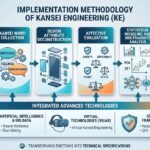
The implementation of Kansei Engineering responds to a systematic and structured procedure designed to translate user emotions and perceptions into concrete design parameters. According to Yohanny et al. (2025), building upon the conceptual frameworks of this discipline, the general process comprises the following fundamental stages:
Step 1: Choice of Product Domain
This first phase consists of accurately defining the design object, clearly identifying the product or service to be developed or refined, as well as the targeted user segment or market (Núñez et al., 2026). Representative examples are presented below:
| Sector | Design Object | Target Audience | Source |
| Automotive | Formal and aesthetic design of the front section of electric vehicles. | Experts (university professors) and young users aged 18 to 24 linked to design and engineering. | Núñez et al. (2026) |
| Fashion and Cultural Heritage | Modernization of the traditional Nyonya Kebaya garment design. | Young consumers aged 18 to 36 who purchased the garment within the last year. | Guo et al. (2026) |
| Transportation and Mobility | Interior design of private compartments in passenger trains. | Indonesian citizens with prior experience traveling by train (men and women across various age and income levels). | Yohanny et al. (2025) |
| Complex Industrial Machinery | Counterbalanced electric forklifts with a battery capacity of 1 to 3.5 tons. | Industry experts, designers, internal company staff, and engineering professors/students. | Zhu et al. (2025) |
| Services and Culture | Mobile app interface design of inclusive technology for the Helga de Alvear Museum. | Museum visitors aged 18 to 80 with smartphone experience and visual capability. | López & González (2026) |
| Everyday Consumer Goods | Design of the shape, display, panels, and buttons of electronic scales. | Users (men and women) aged 20 to 55 with prior purchasing experience with the product. | Kang (2024) |
Step 2: Construction of Semantic Space (Determination of Kansei Words)
In this stage, a broad vocabulary of adjectives—termed “Kansei words”—is collected to describe users’ emotional and affective responses and perceptions regarding the product. These terms can be extracted from scientific literature, interviews, or specialized publications (Guo et al., 2026). Since the initial collection can include hundreds of words, a filtering and synthesis process is applied (through focus group discussions, affinity diagrams, or semantic grouping) to select only the most representative Kansei words.
On the other hand, Liu et al. (2023) proposed a Kansei word pair selection method based on term frequency under the dimensions of evaluation, potency, and activity (TF-EPA). This methodology identifies the adjective pairs that best represent the product’s affective images, optimizing Kansei Engineering to adapt it to emotional design trends in the Big Data era.
Below is a structured table with examples detailing how this process was conducted across different research studies:
| Sector | Initial Collection | Filtering and Final Semantic Space | Source |
| Everyday Consumer Goods (Electronic scales) | 30 descriptive adjectives were extracted by consulting books, newspapers, magazines, and the internet. | Filtered by a panel of 10 experts to combine similar meanings, resulting in 7 representative Kansei words: elegant, dynamic, youthful, cute, novel, interesting, and fashionable. | Kang (2024) |
| Transportation (Train compartments) | 120 descriptive words were collected from magazines, books, and other publications. | Reduced to 40 words via a focus group; after preliminary surveys, 6 words remained on the scale: comfortable, luxurious, unique, pleasant, simple, and modern. | Yohanny et al. (2025) |
| Automotive (Electric vehicle front design) | 83 Kansei terms extracted through a systematic review of technical literature. | Frequency reduction to 15 terms evaluated by 33 experts; subsequent statistical analysis consolidated them into 4 final dimensions: Sustainable, Safe, Innovative, and Quality. | Núñez et al. (2026) |
| Advertising and Digital Environments (E-commerce advertising) | Massive corpus of 446 English words encapsulating styles, personalities, and visual effects. | Reduced to 98 adjectives, then grouped by 15 professionals via Card Sorting, resulting in 5 final pairs: Direct–Restrained, Lively–Calm, Popular–Futuristic, Fluid–Rhythmic, and Exaggerated–Subdued. | Chang et al. (2025) |
| Fashion and Cultural Heritage (Nyonya Kebaya garment) | 90 words collected through open interviews and electronic magazine analysis. | Card sorting and cluster analysis revealed 5 major dimensions and key terms such as: Local, International, Elaborate, Minimalist, Authentic, Feminine, Intricate, and Plain. | Guo et al. (2026) |
| Services and Culture (Inclusive museum app) | General descriptive vocabulary extracted from functional needs categorized into four main aspects of the application. | Grouping of adjectives into opposite pairs: Modern–Antique, Professional–Amateur, Easy–Confusing, Immediate–Complex, Conservative–Up-to-date, Extravagant–Simple, Neat–Messy, and User-friendly–Difficult to use. | López & González (2026) |
| Sustainable Materials (Birch bark leather) | Sensory descriptors suggested by 10 participants while interacting tactilely and visually with material samples. | Cross-referenced with theoretical vocabularies to establish 10 primary word pairs (e.g., Soft–Rough, Warm–Cold) and 12 secondary pairs. | Liu & Song (2025) |
Step 3: Definition of Property Space (Product Deconstruction)
In this stage, according to Yohanny et al. (2025), the product is deconstructed into its physical and visual features, structuring them into “items” (such as shape, color, material, or surface finish) and their respective “categories” or levels (for example: green hue, curved silhouette, or wood texture). Based on the combination of these properties, samples, prototypes, or visual representations are conceived to be subsequently evaluated with users.
Below are representative examples extracted from scientific literature:
| Sector | Items (Properties) | Categories (Levels) | Outcome | Source |
| Automotive (Electric vehicle front design) | Grille shape and headlight shape. | Grille (6 levels): Elongated/slender, organic, banner-type, polygonal, visual, and “no grille”. Headlights (5 levels): Arc, double arc, slim, polygonal, and rounded. | Generation of 30 vehicle images by systematically combining features. | Núñez et al. (2026) |
| Transportation and Mobility (Private train compartments) | Shape, color palette, material texture, and surface appearance. | Shape: Curved or straight lines. Color: Studio green, emerald green, or sage green. Texture: Teak, mahogany, or pine wood. Surface: Glossy or matte. | Set of 8 comprehensive compartment designs visualized in augmented reality. | Yohanny et al. (2025) |
| Everyday Consumer Goods (Electronic scales) | Outer contour, display, mechanical keys, combination keys, operation panel, and weighing pan. | 6 different design variations for each of the 6 physical features. | Generation of a morphological space with 46,656 possible design combinations ($6^6$). | Kang (2024) |
| Advertising and Digital Environments (E-commerce ads) | Structural elements (duration, layers, narrative patterns, segment state, auxiliary sequences) and animation elements (30 variables). | Motion effect: 18 levels (slide, zoom, rotate, etc.). Motion amplitude: 2 levels (small, large). Speed: 5 velocity curves. | Parameterization and optimal generation of animation effects for dynamic advertising. | Chang et al. (2025) |
| Fashion and Cultural Heritage (Nyonya Kebaya garment) | Structure/silhouette, technique, pattern/motif, and color. | Structure: Shorten hemline, add princess seams. Technique: Limit lace to 25% of the border. Pattern/Color: Pastel base colors, reduce embroidery density by 15%. | Optimization of traditional garment design appealing to youth without losing authenticity. | Guo et al. (2026) |
Step 4: Data Collection (Sensory Evaluation)
In this phase, evaluation questionnaires are structured by relating the design samples defined in the previous step with the selected Kansei words. Generally, a semantic differential scale—such as the 5- or 7-point Osgood scale—is applied, which uses pairs of opposite adjectives for users to rate their perceptual responses to each presented prototype.
The Semantic Differential Scale: The Core Tool of Kansei Engineering
The vast majority of Kansei Engineering applications converge on the same measurement tool: the semantic differential scale. This consists of opposing pairs of contrasting adjectives (for example: “modern – outdated,” “warm – cold,” or “sturdy – fragile”) on a numerical gradient of 5 or 7 levels, asking the evaluator to rate the product between both extremes.
Simplified example applied to car seat design:
| Adjective A | 1 | 2 | 3 | 4 | 5 | Adjective B |
| Sporty | ● | Family-oriented | ||||
| Luxurious | ● | Budget-friendly | ||||
| Warm | ● | Cold |
By administering this scale to a representative sample of users and statistically cross-referencing the results with the object’s physical attributes (using techniques such as Quantification Theory Type I), an analytical model is constructed linking each emotional response with quantitative design parameters, moving beyond mere intuition.
Step 5: Data Synthesis and Analysis (Statistical Modeling)
The data collected from the evaluations are processed using multivariate statistical methods or mathematical models to establish the exact correlation between affective responses (Kansei) and the physical attributes of the product. According to Yohanny et al. (2025), the most widely used analytical tools at this stage include Principal Component Analysis (PCA), Quantification Theory Type I (QT1), cluster analysis, and machine learning or artificial intelligence algorithms. This processing allows for determining, in a quantitative manner, which specific design parameter triggers a given emotional response in the user.
Step 6: Evaluation and Validation of Results
In this final phase, decision-making focuses on consolidating the findings from data analysis to define optimal design specifications. The conceived solutions undergo a validation process to confirm that the final proposal satisfies stylistic expectations and effectively evokes the projected emotional response. According to Zhu et al. (2025), in advanced models, this verification is complemented by objective methodologies such as eye-tracking.
Examples of Kansei Engineering in Action: Success Cases and Sectoral Effectiveness
Kansei Engineering has been implemented with remarkable success across a wide variety of industries, driving the development of solutions with deep emotional resonance and high consumer satisfaction rates. However, research by Hartono and Parung (2026) cautions that its effectiveness varies by sector: it demonstrates outstanding performance in hospitality and e-commerce by capturing complex affective nuances, while exhibiting a moderate-to-high impact in logistics and aviation by strengthening perceptions of trust and efficiency. Likewise, the study identifies promising emerging potential in healthcare and digital robotic services. Prominent cases are highlighted below:
Automotive Design and Transportation Sector
An automaker implemented Kansei Engineering to conceive a vehicle capable of evoking sensations of sophistication, dynamism, and luxury in its target segment. By deciphering the affective responses that consumers associate with high-end vehicles, the company managed to develop a model that not only met functional requirements but also connected deeply with the emotional desires of the public.
An emblematic case is Mazda, whose application of Kansei Engineering resulted in the Zoom-Zoom concept, focused on emphasizing the joy of driving and the close emotional connection with the automobile. Meanwhile, Lai et al. (2022) used internet big data to identify Kansei expectations in the exterior design of new energy vehicles (NEVs), such as electric cars. In the same vein, Lai et al. (2024) integrated online reviews with offline analytical data, formulating an innovative framework to merge both sources in Kansei Engineering applied to intelligent and connected vehicle (ICV) features.
Furthermore, Lu et al. (2024) identify three key stages in the evolution of the discipline within the transportation industry:
- Origin (1992–2005): With a primary focus on the automotive sector, it relied on statistical models to link design attributes with user behavior and feedback, guiding decision-making.
- Transition and Expansion (2006–2017): Introduced advanced algorithms (such as neural networks and fuzzy logic) alongside physiological measurement instruments (blood pressure and electroencephalograms) to predict and quantify user perception in aeronautical and railway environments.
- Divergence and Convergence (2018–present): Incorporates cutting-edge technologies such as machine learning and Virtual Reality. Current research addresses cognitive fatigue, emotional intelligence, and stress mitigation to optimize user experience and productivity across various modes of transportation.
Consumer Electronics Design
According to López et al. (2021), the Kansei methodology has a widespread and direct application in the development of technological devices and electronic tools.
In this field, a technology firm used Kansei Engineering to conceive a smartphone that would convey feelings of innovation and ease of use. Through this approach, the company identified that users linked innovation with sleek lines and advanced features, while usability was associated with intuitive controls and a simplified interface. By integrating these emotional inputs into the device’s development, the company launched a product into the market with strong acceptance and commercial resonance.
Service Design and Experiential Spaces
A hotel chain applied the principles of Kansei Engineering to transform customer experience, consolidating a warm and welcoming atmosphere. The company identified that guests associated hospitality with staff warmth, lodging comfort, and a feeling of home-like comfort. By integrating these emotional cues into its service offering, the business generated a more memorable and satisfying experience.
In this same domain, Habyba et al. (2023) applied Kansei Engineering to the architecture of university learning environments, deriving two key spatial concepts: “an optimal classroom with fresh, neat lines” and “a classroom featuring outstanding illumination and brightness.”
Interactive Digital Advertising Design
Chang et al. (2025) explored the creation of interactive digital advertisements through human–AI collaboration alongside Kansei Engineering, demonstrating that this approach significantly outperforms conventional tools. The design platform developed in the study achieved a score of 82.78 out of 100 on the System Usability Scale (SUS). By integrating human perception models with algorithmic optimization (Genetic Algorithms and Backpropagation Neural Networks), the researchers successfully overcame the emotional coldness typical of AI-generated content, resulting in hyper-personalized advertising pieces with deep affective resonance in consumers.
Challenges and Considerations for the Implementation of Kansei Engineering
The practical adoption of Kansei Engineering faces various theoretical, methodological, and operational obstacles. Its main challenges are structured across the following dimensions:
Complexity in Capturing and Quantifying Emotions
The concept of Kansei refers to subtle, complex human perceptions that are often difficult to articulate through conventional language (Lu et al., 2024). Contemporary approaches based on massive data analysis—such as text mining of online reviews—risk oversimplifying these affective responses, which can lead to a loss of contextual depth and the omission of cultural or situational nuances (Hartono & Parung, 2026). Likewise, processing this digital footprint poses critical challenges associated with data quality, bias, and interpretability, especially when addressing informal or multilingual expressions.
Object Dependency and Lack of Standardization
Due to the wide variety of existing products, Kansei Engineering still lacks a systemic theory and universal tools to deconstruct design attributes uniformly (Lu et al., 2024). Current methods are heavily conditioned by the specific object evaluated (for instance, criteria for deconstructing a computer peripheral differ radically from those applied to a bicycle). Furthermore, Hartono and Parung (2026) note high methodological heterogeneity and a marked absence of empirical cross-validation in scientific literature, which weakens global consistency and hinders cross-industry comparisons.
Constraints on Creativity and Disruptive Innovation
According to Kang (2024), in its traditional approach, Kansei Engineering relies on morphological analysis to deconstruct the product, which tends to pigeonhole the creative process within a rigid framework of pre-existing grids and styles. This constraint limits the team’s flexibility and imaginative reach, making it difficult for designers to conceive truly unprecedented shapes or disruptive proposals that break away from market norms.
Difficulties in Complex Environments and Use of Biometrics
The methodology still lacks systematic parametric tools to deconstruct design attributes in dynamic, highly complex scenarios, such as the aerospace industry (Lu et al., 2024). On the other hand, while physiological or biometric validation (such as eye-tracking or electroencephalography) provides objectivity, it requires strictly controlled experimental environments and specialized equipment (Hartono & Parung, 2026). This requirement limits evaluations to small sample sizes, restricting the generalizability of findings and increasing adoption costs for large-scale industrial applications.
Cultural Biases and Generalizability Limitations
Hartono and Parung (2026) highlight that research in Kansei Engineering exhibits a marked concentration in East and Southeast Asian contexts, which may introduce interpretative biases in constructing and understanding emotional responses. Consequently, findings from one study cannot be directly transferred to other cultural environments, regions, or industrial sectors without prior substantial methodological adaptations.
“Black Box” Models in Artificial Intelligence Integration
According to Chang et al. (2025), the growing adoption of deep learning methods in Kansei Engineering for automated content generation poses serious interpretability challenges. The inherent “black box” nature of these algorithms makes it difficult to understand the logic behind the generation process, impeding refined and transparent correlation between user affective responses and produced design attributes.
Integration of Kansei Engineering with Advanced Tools
Kansei Engineering (KE) does not operate in isolation; on the contrary, it articulates synergistically with a broad spectrum of technological tools, statistical models, and innovation methodologies. This integration allows for overcoming the initial subjectivity of the discipline, refining its analytical precision, and responding to dynamic design environments. In this regard, Schütte et al. (2023) highlight that, since the beginning of this millennium, the global expansion of the Kansei approach to Europe and other continents has driven the incorporation of new applications, including Virtual Reality and Artificial Intelligence.
Below, this methodological convergence is classified into the following key areas:
Artificial Intelligence, Algorithms, and Data Mining
To process massive volumes of information and predict user affective responses with high precision, Kansei Engineering articulates with advanced computational learning techniques:
- Neural Networks (BPNN or CNN) and Genetic Algorithms (GA): According to Chang et al. (2025), they are used to model the mapping between Kansei words and design elements, automating the generation of optimal parameters (for example, in creating emotionally adapted advertising animations).
- Text Mining and Sentiment Analysis: They enable the extraction of Kansei words and product attributes directly from large volumes of reviews and comments on digital platforms, achieving scalable, real-time evaluations grounded in Big Data (Hartono & Parung, 2026). Likewise, Hartono et al. (2023) propose a structured methodology integrating Kansei text mining to consolidate robust service design.
- Support Vector Regression (SVR): An advanced algorithm that rigorously maps non-linear relationships between customer emotional perceptions and physical design attributes, overcoming the limitations of traditional statistical approaches (Kang, 2024).
Quality Models and Decision-Making
Kansei Engineering (KE) is integrated as a strategic tool in product and service evaluation frameworks to prioritize design requirements:
- Kano Model and Continuous Fuzzy Kano Model (CFKM): They are integrated with KE to categorize emotional needs and determine their degree of impact on customer satisfaction and delight (Kang, 2024). In this regard, Cai et al. (2022) proposed a methodological framework based on the combination of Kansei Engineering and Kano for service design oriented toward user perception.
- SERVQUAL and QFD (Quality Function Deployment): They integrate with KE to evaluate the gap between service expectations and performance, translating affective responses into concrete operational decisions (Hartono & Parung, 2026). Likewise, Ginting et al. (2020) analyzed the convergence between Kaizen and QFD, concluding that KE allows translating customer emotions into technical specifications, while QFD helps optimally structure their requirements.
- Analytic Hierarchy Process (AHP) and Fuzzy Comprehensive Evaluation (FCE): According to Zhu et al. (2025), they are used to weight the relative importance of various evaluation criteria and statistically prioritize different design alternatives in complex products (such as in the industrial validation of electric forklifts).
Biometric and Psychophysiological Tools
To avoid relying solely on self-reported data (questionnaires), KE integrates measurements of unconscious and physiological reactions:
- Eye-Tracking: Captures user attention time, gaze trajectories, and visual heatmaps when viewing the product (such as the front design components of an electric vehicle), providing objective validation to surveys (Núñez et al., 2026).
- Bodily and Neurological Measurements: Involve the use of electroencephalograms (EEG) or measuring changes in pupil size to identify emotional arousal and the level of genuine consumer interest (Lu et al., 2024).
Virtual and Immersive Technologies
The application of so-called “Virtual Kansei Engineering,” through Virtual Reality (VR) and Augmented Reality (AR), allows users to interact with simulated environments or explore design attributes in 360 degrees. This facilitates the evaluation of train cabins or the virtual texture of sustainable textiles, dispensing with the manufacturing of costly physical prototypes (Liu & Song, 2025). Meanwhile, Liu and Yang (2022) developed an immersive VR-based method to map the relationship between product morphology and consumer affect across four dimensions: generality, unity, interrelation, and detail. Their study concluded that VR-supported predictive models offer higher accuracy and reliability when anticipating user emotional preferences.
Creative Innovation Methodologies
To avoid getting stuck in redesigning variations of pre-existing elements, KE pairs with disruptive methods:
- Associative Creative Thinking Method (ACTM): According to Kang (2024), ACTM overcomes the limitations of rigid morphological analysis by integrating biological inspiration (bionic design), allowing user emotions to translate into entirely new creative forms (such as a design inspired by a fish tail or cat paws).
- TRIZ (Theory of Inventive Problem Solving): It is used to generate long-term design service concepts that are creative and resolve operational contradictions (Hartono & Parung, 2026). Hartono (2020) proposed a modified application based on Kansei Engineering for sustainable service design incorporating TRIZ along with human factors and ergonomic concerns, conducting an empirical study in an international airport lounge and lobby service setting to confirm the applicability of the proposed model.
Advanced Statistical Modeling
In its data synthesis phases, KE regularly relies on Principal Component Analysis (PCA) and Cluster Analysis tools to group users or Kansei words with similar meanings. Likewise, it employs Quantification Theory Type 1 (QT1) models to mathematically find the ideal combination of design variables.
Emerging Trends in the Use of Kansei Engineering
Hybrid Models for High-Complexity Products
Zhu et al. (2025) propose a Hybrid Kansei Engineering (HKE) model, which offers a comprehensive, precise, and effective method for evaluating complex product designs. This approach helps designers overcome challenges such as high technical manufacturing requirements and the multiplicity of design indicators. Originally developed by Matsubara and Nagamachi, HKE is articulated through two interconnected subsystems: Forward Kansei Engineering (FKE) and Backward Kansei Engineering (BKE).
Artificial Intelligence, Dynamic Interaction, and Continuous Data
Meanwhile, Sung and Isa (2024) demonstrate that Artificial Intelligence (AI) strengthens KE by optimizing emotional bonds with users. This is achieved through the extraction of implicit preferences, automated sketch generation, and the customization of technological products (such as service robots). In the same vein, Qu et al. (2026) emphasize that, unlike the discrete Kansei data of conventional design, the perceptions generated by current smart products are continuous and dynamic.
Integration into Digital Platforms and Real-Time Customization
Finally, Hartono and Parung (2026) highlight the convergence of KE within digital ecosystems, automated systems, and AI. Through the use of algorithms, neural networks, and recommendation engines, the discipline interprets customer affective responses to adjust design proposals or service configurations in real time, achieving superior levels of hyper-personalization.
Conclusion: The Strategic Value of Emotion-Based Design
Kansei Engineering establishes itself as a decisive methodology in product and service design by systematically integrating customer affective responses into the innovation process. This approach enables the conception of solutions with greater emotional resonance, elevated levels of satisfaction, and a solid market positioning.
Faced with the inherent complexity of quantifying human emotions, contemporary research has evolved toward the synergistic integration of Kansei Engineering with Artificial Intelligence, immersive technologies, and advanced quality models. By bridging the gap between user perception and technical specification, the discipline transforms design into a competitive advantage characterized by sustainable differentiation and customer loyalty.
Frequently Asked Questions about Kansei Engineering
What is Kansei Engineering and what is its main goal?
Kansei Engineering (KE) is a product and service development methodology that translates users’ emotional responses, feelings, and subjective expectations into concrete technical parameters and physical design attributes. Its primary goal is to bridge the gap between human affective perception and engineering specifications.
In which industries or fields is Kansei Engineering applied?
KE is applied across various sectors, including the automotive industry (e.g., Mazda’s Zoom-Zoom philosophy or intelligent vehicles), consumer electronics (smartphones and intuitive interfaces), architecture and service management (hospitality and educational space design), and interactive digital advertising.
How are “Kansei words” selected and evaluated?
Kansei words are adjectives or phrases that describe the affective experience toward a product. They are gathered using semantic analysis and text mining from customer reviews. Subsequently, they are filtered and statistically evaluated using multivariate techniques such as Principal Component Analysis (PCA) or Quantification Theory Type I (QT1).
How is Artificial Intelligence integrated with Kansei Engineering?
Artificial Intelligence enhances KE through neural networks, genetic algorithms, and regression models (SVR) to predict user emotions and automatically generate hyper-personalized design alternatives. Furthermore, it enables processing dynamic and continuous Kansei data in smart products.
What are the main limitations of this methodology?
Its primary challenges include the complexity and cultural biases in interpreting emotions, a high dependency on the specific object being evaluated, the high cost of biometric validation (eye-tracking, electroencephalography), and the “black box” nature of Deep Learning algorithms.
Reference
Cai, M., Wu, M., Luo, X., Wang, Q., Zhang, Z., & Ji, Z. (2022). Integrated Framework of Kansei Engineering and Kano Model Applied to Service Design. International Journal of Human–Computer Interaction, 39(5), 1096–1110. https://doi.org/10.1080/10447318.2022.2102301
Chang, D., Wang, L., Xiang, Y., Zhu, X., & Lee, C. (2025). Exploring human perception in interactive digital advertising: A Genetic-Kansei engineering approach with human-AI collaboration. Knowledge-Based Systems, 311, 113072. https://doi.org/10.1016/j.knosys.2025.113072
Ginting, R., Ishak, A., Malik, A. F., & Satrio, M. R. (2020, December). Integration of kansei engineering and quality function deployment (qfd) for product development: a literature review. In IOP Conference Series: Materials Science and Engineering (Vol. 1003, No. 1, p. 012020). IOP Publishing.
Guo, C., Yahaya, S. R., Liu, H., Lin, Y., Liu, M., & Wang, W. (2026). A Kansei engineering approach to optimizing traditional Nyonya Kebaya for young consumer preferences. Journal of Engineered Fibers and Fabrics. https://doi.org/10.1177/15589250251398450
Habyba, A. N., Dewayana, T. S., Rahmawati, N., & Rhamanda, D. (2023, December). An affective university classroom design formula based on kansei engineering approach. In AIP Conference Proceedings (Vol. 2680, No. 1). AIP Publishing.
Hakim, A., Suhardi, B., Laksono, P. W., & Ushada, M. (2024). Systematic Review of Kansei Engineering Method Developments in the Design Field. Jurnal Optimasi Sistem Industri, 23(1), 92-108.
Hartono, M. (2020). The modified Kansei Engineering-based application for sustainable service design. International Journal of Industrial Ergonomics, 79, 102985. https://doi.org/10.1016/j.ergon.2020.102985
Hartono, M., Prayogo, D. N., Ronyastra, I. M., & Baredwan, A. (2023). Kansei engineering with online review mining methodology for robust service design. Theoretical Issues in Ergonomics Science, 25(4), 495–520. https://doi.org/10.1080/1463922X.2023.2261995
Hartono M and Parung C. 2026. Kansei Engineering in the Evolving Service Sector: A Decade of Insights [version 2; peer review: 2 approved, 1 approved with reservations]. F1000Research 2026, 15:301 https://doi.org/10.12688/f1000research.174681.2
Kang, X. (2024). Biologically inspired product design combining Kansei Engineering and Association Creative Thinking Method. Advanced Engineering Informatics, 62, 102615. https://doi.org/10.1016/j.aei.2024.102615
Lai, X., Zhang, S., Mao, N., Liu, J., & Chen, Q. (2022). Kansei engineering for new energy vehicle exterior design: An internet big data mining approach. Computers & Industrial Engineering, 165, 107913. https://doi.org/10.1016/j.cie.2021.107913
Lai, X., Lin, S., Zou, J., Li, M., Huang, J., Liu, Z., Li, D., & Fu, H. (2024). Kansei engineering for the intelligent connected vehicle functions: An online and offline data mining approach. Advanced Engineering Informatics, 61, 102467. https://doi.org/10.1016/j.aei.2024.102467
Lin, S., Shen, T., & Guo, W. (2021). Evolution and emerging trends of kansei engineering: A visual analysis based on citespace. Ieee Access, 9, 111181-111202.
Liu, X., & Yang, S. (2022). Study on product form design via Kansei engineering and virtual reality. Journal of Engineering Design, 33(6), 412–440. https://doi.org/10.1080/09544828.2022.2078660
Liu, Z., Wu, J., Chen, Q., & Hu, T. (2023). An improved Kansei engineering method based on the mining of online product reviews. Alexandria Engineering Journal, 65, 797-808. https://doi.org/10.1016/j.aej.2022.09.044
Liu, Y., & Song, J. (2025). Sustainable fashion innovation: Optimizing birch bark materials with Kansei Engineering. En L. C. Jain, Q. Wu, F. Shi, & V. E. Balas (Eds.), International Conference on Mechanical, Engineering, and Interaction Design (ICMEID 2025) (Proc. of SPIE Vol. 14018, Artículo 140184P). https://doi.org/10.1117/12.3088822
López, Ó., Murillo, C., & González, A. (2021). Systematic Literature Reviews in Kansei Engineering for Product Design—A Comparative Study from 1995 to 2020. Sensors, 21(19), 6532. https://doi.org/10.3390/s21196532
López, O., & González, A. G. (2026). Kansei Engineering as a Tool for Service Innovation in the Cultural Sector: The Design of an Inclusive Technology Application. Applied Sciences, 16(1), 457. https://doi.org/10.3390/app16010457
Lu, W., Ye, C., Fang, Y., Čok, V., & Petiot, J. (2024). A systematic review of Kansei engineering in vehicle design. Digital Engineering, 3, 100022. https://doi.org/10.1016/j.dte.2024.100022
Nagamachi, M. (1995). Kansei Engineering: A new ergonomic consumer-oriented technology for product development. International Journal of Industrial Ergonomics, 15(1), 3-11. https://doi.org/10.1016/0169-8141(94)00052-5
Núñez, R., Córdoba, A., de las Heras, A., & Luque, A. (2026). Kansei-based analysis of front-end design features in electric automobiles. International Journal of Affective Engineering. Publicación anticipada en línea. https://doi.org/10.5057/ijae.IJAE-D-26-00001
Qu, Q.-X., Guo, F. and Duffy, V.G. (2026). Kansei Engineering: Current Challenges and Future Trends with Advances in Artificial Intelligence. In Advances in Human-AI Collaboration (eds V.G. Duffy, W. Karwowski and G. Salvendy). https://doi.org/10.1002/9781394266401.ch15
Schütte, S., Lokman, A. M., Marco-Almagro, L., Ishihara, S., Yanagisawa, H., Yamanaka, T., … & Coleman, S. (2023). Kansei for the Digital Era. International Journal of Affective Engineering, 23(1), 1-18.
Sung, WT., Isa, I.G.T. (2024). The Integration of Kansei Engineering and Artificial Intelligence Based on Methodology and Application Perspective: A Review. In: Tsai, Tw., Chen, K., Yamanaka, T., Koyama, S., Schütte, S., Mohd Lokman, A. (eds) Kansei Engineering and Emotion Research. KEER 2024. Communications in Computer and Information Science, vol 2313. Springer, Singapore. https://doi.org/10.1007/978-981-97-9890-2_11
Xue, L., Yi, X., & Zhang, Y. (2020). Research on Optimized Product Image Design Integrated Decision System Based on Kansei Engineering. Applied Sciences, 10(4), 1198. https://doi.org/10.3390/app10041198
Yohanny, D. K., Purwaningrum, L., & Mulyono, A. (2025). Application of Kansei Engineering in Various Train Compartment Designs to Determine the User’s Affective Response. IIUM Engineering Journal, 26(1). https://doi.org/10.31436/iiumej.v26i1.3239
Zhu, T., Wu, C., Zhang, Z., Li, Y., & Wu, T. (2025). Research on Evaluation Methods of Complex Product Design Based on Hybrid Kansei Engineering Modeling. Symmetry, 17(2), 306. https://doi.org/10.3390/sym17020306

Editor and founder of “Innovar o Morir” (‘Innovate or Die’). Milthon holds a Master’s degree in Science and Innovation Management from the Polytechnic University of Valencia, with postgraduate diplomas in Business Innovation (UPV) and Market-Oriented Innovation Management (UPCH-Universitat Leipzig). He has practical experience in innovation management, having led the Fisheries Innovation Unit of the National Program for Innovation in Fisheries and Aquaculture (PNIPA) and worked as a consultant on open innovation diagnostics and technology watch. He firmly believes in the power of innovation and creativity as drivers of change and development.