Economic history demonstrates that technological revolutions are rarely neutral. From the steam engine to the internet, every wave of innovation has redrawn the map of global prosperity. Today, we stand at a new threshold: the massive advent of Artificial Intelligence (AI), a technology that promises to transform human development but also threatens to fracture the global economy.
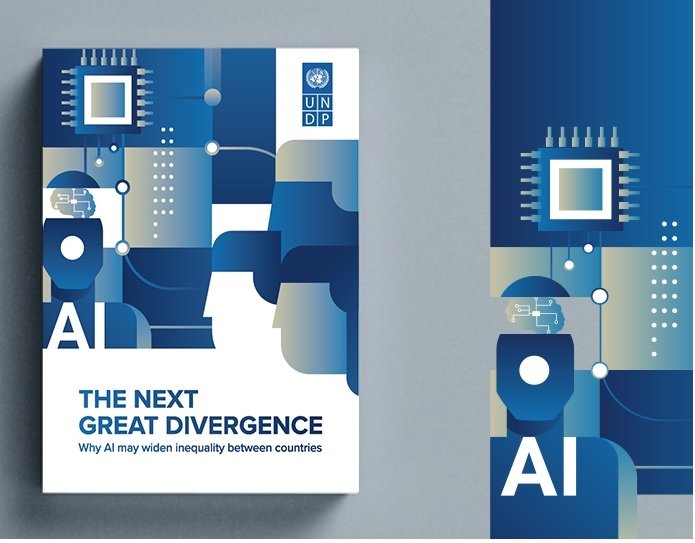
According to the recent UNDP report, “The Next Great Divergence,” the Asia-Pacific region—and by extension, the entire world—faces a critical choice. The speed of change is dizzying, and the risk of leaving vast segments of the population behind is very real.
“AI is moving at breakneck speed, and many countries are still at the starting line,” warns Kanni Wignaraja, UN Assistant Secretary-General and UNDP Regional Director for Asia and the Pacific. For Wignaraja, the region’s reality serves as a mirror for the rest of the world: “The experience of Asia and the Pacific highlights how quickly gaps can emerge between those who shape AI and those who are shaped by it.”
In “Innovate or Die,” we deeply analyse this document and the voices of its protagonists to understand how innovators and leaders can steer this technology toward convergence rather than exclusion.
Key takeaways
- An Unequal Race: AI is advancing rapidly, yet many nations remain at the starting line, creating immediate gaps between technology developers and mere consumers.
- Capacity is Key: The dividing line in this era is not solely wealth, but “capacity”: the combination of skills, computing power, and robust governance.
- Strategic Collaboration: Leading institutions in China and international bodies underscore the necessity of global governance to align AI with sustainable development.
- Systemic Impact: This transformation affects human security, economic structure, and trust in public institutions.
- Urgent Political Action: Differentiated roadmaps combining physical infrastructure with human capital are required to prevent the digital divide from becoming a development chasm.
A New Technological Tipping Point
The report posits that AI is not merely another tool, but a general-purpose technology comparable to electricity or writing. It learns, adapts, and performs complex cognitive tasks, granting it historic transformative power. However, unlike previous revolutions that took decades to unfold, the adoption of generative AI is occurring within a compressed timeframe.
The great unknown lies in its distributional impact. Are we facing a tool that will enable developing countries to “leapfrog” stages by improving education and health, or an engine that will consolidate the dominance of those who already possess the data and infrastructure?
Academic Backing and Global Collaboration
The depth of this analysis is no accident. The report is supported by nine background papers developed in collaboration with leading research institutions in China. Key collaborators include the Institute for AI International Governance, the Institute for Sustainable Development Goals, and the Institute for Climate Change and Sustainable Development at Tsinghua University, as well as the School of Humanities and Social Sciences and the AI Fusion Institute at the University of Science and Technology of China.
This collaboration highlights the importance of integrating the technical and academic expertise of innovation leaders to address global challenges.
Capacity as the New Fault Line
The report details how AI impacts three critical channels: people (capabilities and security), the economy (employment and productivity), and governance (trust and services). However, the determining factor for whether these impacts are positive or negative is preparedness.
Philip Schellekens, UNDP Chief Economist for Asia and the Pacific, identifies the root problem with surgical precision: “The central fault line in the AI era is capacity.” According to Schellekens, the equation for success is clear but demanding: “Countries that invest in skills, computing power, and robust governance systems will benefit; others risk falling far behind.”
This is evident in infrastructure: while advanced nations like Singapore or China possess robust ecosystems of data centres and talent, other countries struggle with basic connectivity and a lack of representative data, rendering them invisible to algorithms or dependent on foreign models.
Towards Inclusive Global Governance
To avoid this “Next Great Divergence,” the report proposes moving from diagnosis to action through deliberate policies that activate both “hard infrastructure” (computing, energy) and “soft infrastructure” (regulations, ethics).
In this scenario, the role of technological powers is fundamental in establishing fair rules of the game. Beate Trankmann, UNDP Resident Representative in China, highlights the proactive role technology leaders must assume: “As a leader in AI, China, in cooperation with other countries, can help inform discussions on establishing global governance mechanisms to ensure AI is harnessed for good and helps advance sustainable development.”
Implications for Innovation Policy:
- Responsible Governance: Establish standards that prioritise transparency and accountability, ensuring AI decisions are explainable and auditable.
- Inclusion by Design: Involve marginalised communities in AI development to avoid algorithmic biases that reinforce social and gender exclusion.
- Future-Proof Systems: Foster open and competitive ecosystems that avoid vendor lock-in and promote digital sovereignty.
Conclusion
Artificial intelligence is not a destination, but a tool. “The Next Great Divergence” reminds us that the future is not predetermined by algorithms, but by human decisions and political will.
For innovation professionals, the message is urgent: the success of AI will not be measured solely by the sophistication of models, but by their capacity to expand human freedoms. If we manage to build inclusive and globally governed systems, AI could be the most potent engine of convergence in history. Otherwise, as UNDP experts warn, we risk inhabiting a world of technological abundance that is, nonetheless, profoundly unequal.
Reference (open access)
United Nations Development Programme. (2025). The next great divergence: Why AI may widen inequality between countries. Regional Bureau for Asia and the Pacific. 130 p.

Editor and founder of “Innovar o Morir” (‘Innovate or Die’). Milthon holds a Master’s degree in Science and Innovation Management from the Polytechnic University of Valencia, with postgraduate diplomas in Business Innovation (UPV) and Market-Oriented Innovation Management (UPCH-Universitat Leipzig). He has practical experience in innovation management, having led the Fisheries Innovation Unit of the National Program for Innovation in Fisheries and Aquaculture (PNIPA) and worked as a consultant on open innovation diagnostics and technology watch. He firmly believes in the power of innovation and creativity as drivers of change and development.