Quality and productivity constitute the fundamental pillars for organizational competitiveness and sustainability within the global marketplace; however, achieving peak performance in these areas is the direct result of rigorously executed continuous improvement processes. Kaizen emerges as a Japanese philosophy dedicated to optimizing processes, eradicating waste, and elevating quality through incremental and steadfast changes. Rooted in the PDCA cycle (Plan, Do, Check, Act) and the 5S methodology, its primary objective is to transform organizational culture by engaging every stakeholder, from executive leadership to frontline personnel.
From a strategic standpoint, Kaizen functions as a management tool that enables the identification of non-value-added activities, thereby streamlining workflows across any corporate structure (Morell et al., 2020). By adopting this methodology, enterprises—regardless of their scale—can maximize operational efficiency with minimal disruption and low capital investment. In this article, we shall explore the core tenets of the Kaizen philosophy and offer key recommendations for its successful implementation within your organization.
Key Highlights
- Philosophy of Perpetual Evolution: Kaizen is not a project with a definitive end date, but rather a mindset of 1% daily incremental improvement that yields exponential long-term results.
- Human-Technological Synergy: In the era of Industry 4.0, AI does not replace Kaizen; it acts as a catalyst that accelerates waste identification and data-driven decision-making.
- The 3 Mus and the 5S Framework: Operational excellence hinges on eradicating the enemies of efficiency (Muda, Mura, Muri) through systemic order and the discipline of the 5S methodology.
- Culture over Hierarchy: Authentic improvement emerges “from the ground up.” Empowering frontline employees is more effective for sustainability than top-down executive mandates.
- Root Cause Diagnosis: Tools such as the “5 Whys” and the Ishikawa Diagram are vital for resolving underlying issues and preventing the recurrence of errors.
- Personal and Corporate Impact: Kaizen is transversal; its application simultaneously overcomes individual procrastination while maximizing corporate profitability.
Kaizen: Etymology, Philosophy, and the Genesis of Continuous Improvement
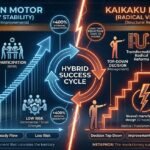
The term Kaizen (改善), derived from the Japanese roots Kai (change) and Zen (goodness or improvement), is defined as a systematic methodology for perpetual refinement. Unlike drastic or disruptive restructurings (Kaikaku), Kaizen proposes a sustainable and participatory evolution applicable to any productive or corporate environment.
Etymologically, the union of the kanjis Kai (改) and Zen (善) projects the vision of “change for the better.” Its fundamental premise maintains that process optimization does not necessarily rely on massive technological investments, but rather on an analytical mindset capable of identifying and rectifying minor inefficiencies on a daily basis.
The “3 Mus”: The Pillars of Inefficiency
For the Kaizen system to remain effective, it is imperative to diagnose and neutralize three critical deviations that compromise productivity:
- Muda (Waste): Any activity that consumes resources without adding tangible value to the end customer (such as waiting times, defects, or excess inventory).
- Mura (Unevenness): Irregularities in the workflow that generate bottlenecks and operational imbalances.
- Muri (Overburden): Excessive demands on human capital or infrastructure, leading to burnout, errors, and mechanical failures.
The 7+1 Strategic Wastes (Muda)
To successfully implement Kaizen, organizations must monitor these eight areas of inoperability:
- Overproduction: Generating goods or services beyond actual demand.
- Waiting Times: Periods of inactivity due to lack of materials or synchronization.
- Unnecessary Transportation: Logistical movements that do not transform the product.
- Over-processing: Executing value-added tasks that the customer has not requested.
- Excess Inventory: Capital tied up in raw materials or finished products.
- Inefficient Motion: Unnecessary physical movement of personnel within their workstations.
- Defects and Rework: Costs derived from a lack of quality and the waste of inputs.
- Underutilized Talent: Dismissing the creativity and proposals of the team represents the most critical loss of intellectual capital in the modern enterprise.
Historical Origins: From Post-War Reconstruction to the Toyota Model
To grasp the magnitude of Kaizen, one must analyze the context of post-war Japan. Following World War II, the nation faced devastated infrastructure and depleted resources. Under the influence of experts such as W. Edwards Deming and Joseph Juran, alongside the Training Within Industry (TWI) programs, Japan fused Western statistical rigor with its traditional work ethic. Although Masaaki Imai globalized the concept through his seminal work, “Kaizen: The Key to Japan’s Competitive Success,” its most emblematic application resides within the Toyota Production System (TPS). Within this ecosystem, continuous improvement was consolidated as the backbone of Lean Manufacturing.
A Strategic and Participatory Approach
Kaizen is not an isolated intervention, but rather a comprehensive strategy to optimize business systems through incremental and sustainable changes. This approach fosters the active participation of all hierarchical levels in detecting operational flaws, directing efforts toward the creation of a resilient competitive advantage. In this regard, Hosono et al. (2020) define Kaizen as an inclusive model for improving quality and productivity, underpinned by a distinctive methodology and philosophy.
Furthermore, Hargrave (2022) contends that this concept transcends technical operability, as it encompasses the creation of an efficient team atmosphere that ensures the commitment of human capital. By optimizing daily procedures, work becomes not only more productive but also more fulfilling, safe, and less taxing for the workforce.
Innovation and Corporate Sustainability
The essence of Kaizen lies in the fact that marginal, constant improvements are the engine of a successful business. This philosophy urges organizations to perpetually evaluate their processes in pursuit of cost savings and excellence in quality. As Daniel (2021) highlights, although Kaizen originated in the manufacturing sector to reduce defects and eliminate waste, its true impact lies in fostering a sense of purpose, individual accountability, and the drive for internal innovation.
Conceptualizing Kaizen: Beyond a Definition, a Culture of Improvement
Etymologically, Kaizen is a Japanese term translated as “change for the better” or “positive evolution.” Nevertheless, within the modern business ecosystem, its most widely accepted meaning is continuous improvement, a concept intrinsically linked to Lean management methodology and principles (Daniel, 2021).
As a philosophy, Kaizen fosters a paradigm where incremental and systematic changes yield an exponential long-term impact; as an operational methodology, it facilitates the optimization of critical areas through precise interventions. Its purpose transcends mere productivity gains: when correctly implemented, Kaizen humanizes the workplace, mitigates strenuous physical effort, and empowers personnel to validate their processes under the rigor of the scientific method.
Unlike radical transformation models imposed from the top-down, Kaizen is rooted in cooperation and cross-functional commitment, ensuring an organic evolution of the organization (Daniel, 2021).
Core Attributes of the Kaizen Methodology
According to Hosono et al. (2020), Kaizen is distinguished by five fundamental attributes that define its success:
- Global Scalability: Its efficacy has allowed it to proliferate across industries under frameworks such as Total Quality Control (TQC) and Total Quality Management (TQM).
- Systemic Focus: Exclusively oriented toward the continuous improvement of existing standards.
- Quality-Productivity Binomial: Simultaneously and equitably maximizes both indicators.
- Operational Inclusivity: Develops participatory models that align quality control statistics with the daily performance of frontline workers.
- Methodological Maturity: Relies on tools refined over more than half a century, such as the 5S framework, Quality Control Circles, and the Just-in-Time (JIT) system.
The 10 Core Principles of the Kaizen Philosophy
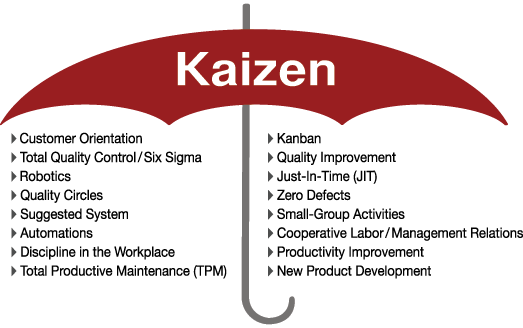
According to Daniel (2021), the successful implementation of Kaizen necessitates the establishment of a shared corporate mindset. The ten principles constituting the core of this philosophy are:
- Challenging Assumptions: Abandoning preconceived ideas and operational biases.
- Proactive Resolution: Anticipating failures and taking immediate action.
- Questioning the Status Quo: Rejecting complacency in pursuit of constant evolution.
- Agility Over Perfectionism: Adopting an iterative and adaptive approach rather than waiting for the “perfect” solution.
- Real-Time Correction: Implementing immediate fixes upon detecting anomalies.
- Cross-Functional Empowerment: Fostering an environment where every contributor feels enabled to propose improvements.
- Root Cause Analysis: Refusing to settle for obvious symptoms; applying the “5 Whys” technique to identify the true origin of a problem.
- Collective Intelligence: Prioritizing the collection of perspectives and insights from diverse hierarchical levels.
- Low-Cost Creativity: Utilizing ingenuity to find optimizations that do not require significant capital investment.
- Perpetual Improvement: Internalizing the reality that the refinement process is never truly finished.
Strategic Results and Sustainability
For Hargrave (2022), adherence to these precepts leads to three critical pillars: the elimination of waste (economic efficiency), the maintenance of optimal standards, and the standardization of processes.
Finally, Fuad et al. (2025) underscore that the contemporary essence of Kaizen resides in constant communication—both horizontal and vertical—continuous learning, and meticulous attention to detail. The ultimate goal is the systematic identification of inefficiencies and superfluous activities that add no value to the production chain, thereby guaranteeing an agile and highly competitive operation.
The Operational Pillars of the Kaizen Method: The 5S System
The 5S framework constitutes the foundational Kaizen tool designed for the technical and efficient organization of the workplace. Comprising the phases Seiri, Seiton, Seiso, Seiketsu, and Shitsuke, this system aims to mitigate organizational stress, eliminate downtime spent searching for assets, and establish a robust foundation for high-quality process standardization.
5S Implementation Matrix.
| Japanese Phase | English Concept | Strategic Objective |
| Seiri | Sort | Distinguish between essential and non-essential items to optimize workspace. |
| Seiton | Set in Order | Arrange every resource in a specific location to guarantee immediate access. |
| Seiso | Shine | Maintain a pristine environment that facilitates early anomaly detection. |
| Seiketsu | Standardize | Institutionalize visual standards to ensure the permanence of the first three phases. |
| Shitsuke | Sustain | Transform the process into a cultural habit ingrained throughout the organization. |
Impact on Exponential Productivity
The implementation of the 5S system transcends mere aesthetic hygiene; it represents a high-impact productivity strategy. Consider an operational scenario: if an employee optimizes their workflow by saving just 30 seconds—avoiding the search for a tool—and this action is repeated 100 times a day across a plant of 500 employees, the organization generates massive efficiency without the need for additional capital investment.
This approach converts order into a tangible competitive advantage, reducing wasted motion and maximizing the company’s installed capacity.
Strategic Analysis: Advantages and Challenges of the Kaizen Model
Implementing the Kaizen method allows organizations to consolidate a culture of continuous improvement, optimize costs, and achieve efficiency levels with remarkable agility. By directly involving human capital in problem-solving, the sense of belonging and cross-departmental collaboration is strengthened. According to research by Vesna et al. (2020), the core benefits lie in personnel empowerment, professional development, and a substantial increase in the company’s global performance.
However, the transition toward this philosophy is not without obstacles. Sahmi and El Abbadi (2024) point out that resistance to change and the time investment required for monitoring are critical barriers. Furthermore, Yokozawa et al. (2021) warn about the impact of anxiety: while a moderate level of tension can drive perseverance, excessive anxiety negatively influences the final system performance.
Comparative: Benefits vs. Implementation Barriers.
| Advantages | Challenges and Disadvantages |
| Process Optimization: Reduces errors and minimizes waste through constant scrutiny. | Cultural Resistance: Cultures with excessive territorialism or closed communication require prior restructuring. |
| Self-Management: By reducing failures, it diminishes the need for constant supervision and inspection. | Workplace Anxiety: Intense Kaizen events can elevate stress and anxiety among personnel. |
| Morale Boosting: Fosters a sense of purpose and individual value within the employee. | Risk of Superficiality: Without genuine commitment, Kaizen events can generate ephemeral enthusiasm without sustainable changes. |
| Operational Synergy: Encourages teamwork, breaking down departmental silos. | Resource Constraints: Requires a considerable investment of time, people, and senior management commitment (Okpala et al., 2024). |
| Customer-Centric Focus: Aligns processes with end-consumer requirements and satisfaction. | Dilution of Change: An excessively gradual approach may be perceived as a weak strategy in the face of disruptive crises. |
Strategic Guide: How to Implement the Kaizen Methodology
After identifying areas of opportunity, the organization must initiate the operational deployment of the model. According to Franken et al. (2025), success in enhancing Operational Performance Improvement (OPI) through Kaizen Events depends on four determining behavioral factors, which must be executed with precision across their respective phases:
4-Step Implementation Roadmap
- Definition Phase: Collective Commitment: Effective problem-solving begins with the group’s absolute readiness. Teams that attend punctually, complete assignments, and remain open to the methodology achieve tangible results. Conversely, passive resistance or systematic grievances invalidate the event and nullify any possibility of improvement.
- Measurement Phase: Establishing Key Performance Indicators (KPIs): A Kaizen Event without metrics is destined for failure. It is imperative to define specific, measurable, and formal indicators (e.g., cost reduction or cycle times) from the outset. Without this mathematical foundation, the team loses focus, and leadership loses interest due to the inability to contrast results.
- Ideation Phase: Quantification of Countermeasures: Every proposed solution must be projected in relation to the established indicator. Forecasting the financial or productive impact of an idea not only sustains team motivation but also justifies the necessary resource investment to senior management.
- Execution Phase: Leadership and Change Advocacy: Final success rests upon the line manager. The individual responsible for the area must lead and defend the implementation of the generated solutions. Evidence demonstrates that when changes are delegated exclusively to external consultants or lack executive backing, operational improvement inevitably fails.
Critical Factors for Organizational Support
Complementing this process, Vesna et al. (2020) underscore that long-term success requires a robust support system. This includes the constant evaluation of employee ideas, the design of efficient internal communication systems, and, fundamentally, a strategic orientation that prepares employees for continuous change.
Analytical Tools for Operational Excellence
The implementation of Kaizen within manufacturing and service processes is a decisive strategy for consolidating sustainable success and securing a competitive advantage (Okpala et al., 2024). To achieve this, the philosophy relies on quality management tools that facilitate the diagnosis of the root causes of inefficiencies, ensuring permanent solutions rather than superficial fixes.
The PDCA Cycle: The Engine of Improvement
According to Alcaraz et al. (2026), maximizing financial returns under the Kaizen model requires the institutionalization of the PDCA cycle and the strategic development of human capital. This cycle is divided into four critical phases:
- Plan: Rigorous identification of the problem and the design of an action plan based on empirical evidence.
- Do: Execution of the improvement through small-scale pilot tests to validate hypotheses.
- Check: Exhaustive analysis of results against established indicators and objectives.
- Act: Standardization of the successful solution across the organization or adjustment of the plan to restart the learning cycle.
Visual Diagnosis: The Ishikawa Diagram and the “5 Whys”
For teams seeking a 360-degree view of their bottlenecks, the Ishikawa Diagram (or Fishbone Diagram) is essential. This tool categorizes problem causes into six operational axes: Manpower, Machinery, Methods, Materials, Environment, and Measurement. Complemented by the “5 Whys” technique, it ensures the organization does not stop at symptoms but reaches the actual origin of the conflict.
Roadmap for Successful Implementation
Based on guidelines by Daniel (2021), Kaizen adoption must follow a structured, participatory flow:
- Active Involvement: Preparing contributors for change through direct participation.
- Opportunity Detection: Co-creating a list of problems and potential improvement areas with the team.
- Creative Ideation: Encouraging disruptive solutions and selecting the most viable one for execution.
- Validation and Analysis: Implementing the solution and monitoring progress at defined intervals, designating clear owners to maintain commitment.
- Standardization and Repetition: Adopting positive solutions at an organizational scale and restarting the process to address new challenges.
Strategic Execution: The “Kaizen Event” Step-by-Step
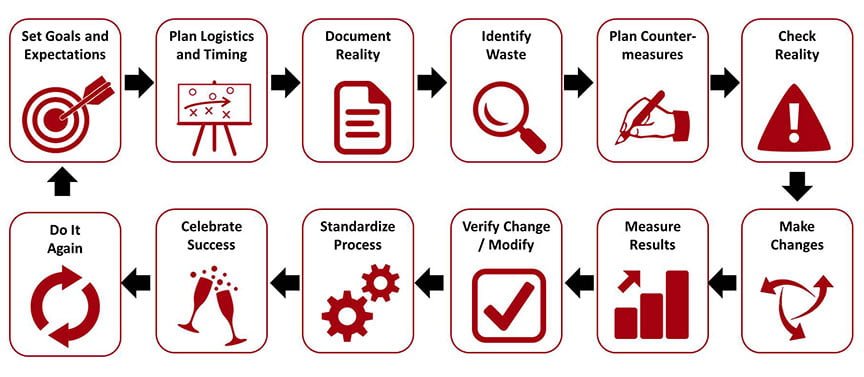
The practical implementation of the Kaizen methodology is articulated through rapid improvement events. These processes are designed to diagnose, implement, and standardize solutions in brief yet intensive cycles. According to EPA (2022) guidelines, a successful event is divided into three critical phases:
Phase 1: Strategic Planning and Preparation
The success of the event depends on the clear demarcation of the objective. The primary challenge is to identify a critical area, whether in administrative processes or production lines.
- Focus Selection: Once the area is chosen, a specific problem is defined to avoid the dispersion of efforts.
- Team Formation: Management must integrate multidisciplinary teams, including workers from the affected area. All members must receive prior training on the organization’s improvement methodology.
- Timeline: Events are designed to be executed over a period of one to seven days, depending on the complexity of the challenge.
Phase 2: Implementation and Root Cause Analysis
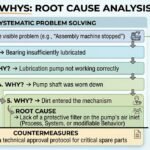
The team must develop a unified understanding of the process’s “current state.” To identify waste and bottlenecks, high-precision tools such as Value Stream Mapping (VSM) and the “5 Whys” technique are utilized.
Example of Root Cause Diagnosis:
- Why did the machine stop? A system overload caused the fuse to blow.
- Why was there an overload? Insufficient lubrication in the bearings.
- Why was the lubrication insufficient? The lubrication pump was not operating at its rated capacity.
- Why did the pump fail? The shaft exhibited premature wear and vibrations.
- Why did the shaft wear out? (Root Cause): Absence of a particulate filter in the system.
Following data analysis and the recording of every non-value-added activity, the team conducts a brainstorming session to select and immediately implement the most promising solutions.
Phase 3: Follow-up and Sustainability of Improvements
To ensure that changes are permanent rather than temporary, a post-event monitoring protocol is established. Team members perform routine tracking of Key Performance Indicators (KPIs), such as:
- Lead Time and Cycle Time.
- Defect and rework rates.
- Optimization of physical floor space.
Critical reviews are recommended at 30 and 90-day intervals to evaluate sustained performance and introduce adjustments that ensure the stability of the new operating standard.
Success Stories: The Multisectoral Impact of Kaizen
The versatility of the Kaizen methodology has enabled its successful implementation across sectors far beyond traditional manufacturing. According to Sahmi and El Abbadi (2024), industries such as healthcare, construction, and Small and Medium-sized Enterprises (SMEs) have adopted this philosophy with exceptional results. Its impact is reflected not only in increased productivity and cost reduction but also in the optimization of workplace safety, occupational health, and organizational learning.
Innovation in Medical Equipment Manufacturing
In the healthcare sector, precision is critical. Purwanto (2022) analyzed the implementation of the Gemba Kaizen culture and the 5S system within the medical equipment industry in Indonesia. The study concludes that focusing on the Gemba (the actual place where the work happens) generates a positive and significant effect on operational performance, guaranteeing superior quality standards for highly complex products.
Sustainability and Industrial Waste Reduction
Kaizen has also established itself as a fundamental tool for environmental responsibility. Goyal et al. (2019) documented the case of a company in India seeking to optimize its manufacturing procedures with minimal investment. Through a project focused on identifying inefficiencies, the company successfully reduced the generation of hazardous material waste by 13.8%. This case demonstrates that continuous improvement is a direct pathway toward both economic and ecological sustainability.
Kaizen vs. Lean, Six Sigma, and Agile: Differences and Synergies
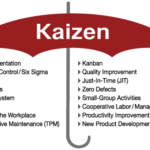
In the realm of operational excellence, Kaizen is often conflated with other frameworks; however, its nature is distinctive. While Lean Manufacturing is a value-centered management system, Kaizen is the underlying cultural philosophy. Its focus does not reside exclusively on technique, but rather on waste elimination through mass participation and the commitment of human capital.
Kaizen vs. Six Sigma: Culture vs. Statistics
Unlike Six Sigma, which employs advanced statistical tools to reduce process variability and defects, Kaizen prioritizes cultural change and incremental improvement. While Six Sigma typically requires specialized experts (Black Belts), Kaizen empowers every contributor to identify and resolve inefficiencies on a daily basis.
Kaizen and Kanban: The Duality of Vision and Flow
The relationship between Kaizen and Kanban is symbiotic. Kanban functions as the visual signaling system that regulates workflow and provides process transparency. In modern management, it is understood that without the visibility provided by Kanban, measurement becomes impossible, and without precise metrics, the Kaizen continuous improvement cycle lacks direction.
Kaizen in the Agile Environment
In the software development and tech services sectors, the Agile methodology has integrated Kaizen principles through “retrospectives.” At the end of each cycle or sprint, teams analyze their performance with a mindset of constant iteration. Both frameworks share a common DNA: adaptation based on real-time feedback and the perpetual pursuit of excellence through minor adaptive adjustments.
Personal Kaizen: A Method for Optimizing Self-Discipline
Applied to individual development, Personal Kaizen suggests that performing a task for just one minute a day is sufficient to dismantle psychological resistance to change. This methodology stands as a high-impact tool for habit formation and health improvement, allowing for the enhancement of self-discipline without the stress associated with unattainable goals. According to Suárez-Barraza et al. (2025), Individual Kaizen is an essential dynamic for understanding the concept of “microwork.” This philosophy, centered on the evolution of the individual, is manifested through four fundamental pillars:
- Jishusei: The intrinsic will for constant self-improvement.
- Ikigai: The alignment of actions with one’s life purpose.
- Sense of Urgency: The awareness of time as a finite resource.
- Kodawari: A deep commitment and the pursuit of perfection in one’s craft.
The One-Minute Rule: Applied Neuroscience in Habit Formation
To overcome initial barriers in complex habits—such as physical exercise or technical training—the strategy involves committing to the activity for only 60 seconds at the same time each day. From a neurological perspective, the brain does not perceive this minimal effort as a threat, thereby neutralizing the procrastination mechanism. Over time, these “micro-habits” become consolidated within the individual’s cognitive architecture, facilitating profound and sustainable life transformations under the principle of incremental improvement.
The Future of Kaizen in the Era of Industry 4.0 and AI
The convergence of Kaizen philosophy and Industry 4.0 technologies represents an unprecedented opportunity to consolidate sustainability and bolster organizational performance. However, as Sahmi and El Abbadi (2024) warn, this integration is not without its challenges, such as the technical complexity involved in standardizing advanced digital systems on a corporate scale.
AI as an Enabling Infrastructure
A common misconception in digital transformation is perceiving technology as an autonomous driver. In this regard, Costache (2026) reveals that Artificial Intelligence (AI) reaches its maximum potential when framed within a Kaizen leadership culture. Under this approach, AI does not act as an imposed technocratic system but rather as an enabling infrastructure that enhances employee learning and active participation, facilitating more precise and rapid continuous improvement.
Digitalization, Transparency, and Governance
Modern digital systems function as critical mediators that strengthen the pillars of environmental sustainability and governance. As concluded by Lizarelli et al. (2025), the use of cutting-edge technologies accelerates the results of Kaizen practices by providing:
- Real-time Traceability: Precise data on the origin and flow of resources.
- Operational Transparency: Full visibility of processes across all hierarchical levels.
- Predictive Waste Detection: The ability to identify inefficiencies before they occur through big data analytics.
Ultimately, Industry 4.0 does not replace the human essence of Kaizen; on the contrary, it equips it with digital tools that transform small daily changes into large-scale qualitative leaps.
Conclusions: Kaizen as a Perpetual Competitive Advantage
Kaizen should not be understood as a final destination, but rather as an infinite journey toward excellence. In a hyper-connected and saturated global market, the ability of an organization—or an individual—to evolve by just 1% each day establishes itself as the only truly sustainable competitive advantage in the long term.
Adopting this philosophy transcends simple operational optimization; its implementation generates profound and positive impacts on quality management, waste eradication, and cost-saving maximization. However, its greatest value lies in the engagement of human capital, transforming every employee into an active agent of innovation.
It is fundamental to understand that the success of this method does not depend on isolated tools, but on a re-engineering of the organizational culture. Only those companies that manage to place continuous improvement at the core of their identity will succeed not only in surviving but in leading within the complex landscape of the 21st century.
Frequently Asked Questions (FAQ) about the Kaizen Methodology
What is the primary difference between Kaizen and Kaikaku?
While Kaizen focuses on small, incremental, and constant improvements involving the entire workforce, Kaikaku refers to radical, disruptive, and large-scale changes—such as the implementation of an entirely new technology—that are typically driven through a “top-down” approach.
How does Kaizen help reduce costs without capital investment?
Kaizen focuses on eliminating waste (Muda), such as excess inventory, idle waiting times, and unnecessary motion. By optimizing existing resources through ingenuity and discipline—such as the 5S framework—you enhance operational efficiency without the need for costly machinery or significant capital expenditures.
What role does Artificial Intelligence play in modern Kaizen?
In 2026, AI serves as an enabling infrastructure. It does not replace the human worker; instead, it provides real-time data and predictive analytics that facilitate flaw identification, thereby accelerating continuous improvement cycles and evidence-based decision-making.
Why is it said that Kaizen “humanizes” work?
Because it empowers frontline employees, granting them a voice and agency in improving their own tasks. Furthermore, by applying the principles of order and cleanliness (5S) and eliminating exhausting physical strain (Muri), it fosters a workplace environment that is safer, less stressful, and more professionally fulfilling.
What is a “Kaizen Event” and how long should it last?
A Kaizen Event is an intensive, highly focused improvement session targeting a specific problem within a designated area. It typically spans between 1 and 7 days. During this period, a multidisciplinary team diagnoses the current state, designs practical solutions, and implements them immediately.
How can an SME implement Kaizen with limited resources?
Kaizen is ideal for SMEs because it does not require a large budget, but rather commitment. One can begin with the “One-Minute Rule” to establish habits or with the “Sort” phase of the 5S framework to reclaim space and time. The focus should be on quick wins that build momentum and trust within the team.
What are the greatest obstacles to Kaizen’s success?
The primary hurdles are cultural resistance to change, a lack of genuine commitment from senior management, and the absence of clear metrics. Without indicators to measure progress, initial enthusiasm typically dissipates within a few months.
References
Alcaraz, J.L.G., Limón Romero, J., Duque Aguilar, J.I. et al. Integration of Kaizen-PDCA for Economic and Social Sustainability in the Manufacturing Industry: A Structural Equation Model. Process Integr Optim Sustain (2026). https://doi.org/10.1007/s41660-026-00709-w
Costache, B. (2026). Kaizen Leadership in the Age of Artificial Intelligence: Continuous Improvement as a Governance Strategy for Sustainable Organizations. International Journal of Education, Leadership, Artificial Intelligence, Computing, Business, Life Sciences, and Society, 4(04), 32-50. https://doi.org/10.65222/VIRAL.2026.1.4.24
Daniel Diann. 2021. Kaizen (continuous improvement). TechTarget
EPA. 2022. Lean Thinking and Methods – Kaizen. Environmental Protection Agency.
Franken, J. C., van Dun, D. H., & Wilderom, C. P. (2025). Kaizen event process factors for operational performance improvement: an archival study. Production Planning & Control, 36(10), 1315-1329.
Fuad AM, Takia NA, Zafir HA, Farrok O (2025) Enhancing operational efficiency through overall equipment efficiency optimization and Kaizen initiatives. PLoS One 20(5): e0320761. https://doi.org/10.1371/journal.pone.0320761
Goyal, A., Agrawal, R., Chokhani, R. K., & Saha, C. (2019). Waste reduction through Kaizen approach: A case study of a company in India. Waste Management & Research, 37(1), 102-107.
Hargrave Marshall. 2022. Kaizen: Understanding the Japanese Business Philosophy. Investopedia.
Hosono, A., Page, J., & Shimada, G. (2020). Workers, managers, productivity: Kaizen in developing countries (p. 327). Springer Nature.
Lizarelli FL, Antony J, Suarez M, Carneiro F, Sony M, Chakraborty A, Ma J, Chan FT (2025), “Analysis of the impact of Kaizen practices on ESG performance and the mediating role of digital systems“. Business Process Management Journal, Vol. 31 No. 8 pp. 148–175, doi: https://doi.org/10.1108/BPMJ-01-2025-0056
Morell-Santandreu, Oscar, Cristina Santandreu-Mascarell, and Julio García-Sabater. 2020. “Sustainability and Kaizen: Business Model Trends in Healthcare” Sustainability 12, no. 24: 10622. https://doi.org/10.3390/su122410622
Okpala Charles, Charles Onyeka Nwamekwe, O C Ezeanyim. The Implementation of Kaizen Principles in Manufacturing Processes: A Pathway to Continuous Improvement. International Journal of Engineering Inventions, 2024, 13 (7), pp.116 – 124. ?hal-04669397?
Purwanto, Agus, Do Gemba Kaizen and 5S Reinforce Medical Equipment Manufacturing Performance? (2020). European Journal of Molecular & Clinical Medicine 2020, Available at SSRN: https://ssrn.com/abstract=3986995
Sahmi, Z., & El Abbadi, L. . (2024). The evolution of Kaizen in the industry: systematic literature review. International Journal of Production Management and Engineering, 12(2), 169–179. https://doi.org/10.4995/ijpme.2024.21143
Suárez-Barraza MF, Miguel-Davila JÁ, Yokozawa K, Cosme-Castorena JE (2025), “Individual Kaizen in Japan: an exploratory multiple case study in a micro work environment“. The TQM Journal, Vol. ahead-of-print No. ahead-of-print. https://doi.org/10.1108/TQM-11-2024-0469
Vesna Janjić, Mirjana Todorović & Dejan Jovanović (2020) Key Success Factors and Benefits of Kaizen Implementation, Engineering Management Journal, 32:2, 98-106, DOI: 10.1080/10429247.2019.1664274
Yokozawa, K., Nguyen, H.A. and Tran, T.B.H. (2021), “Role of personal anxiety in individual kaizen behaviour and performance: evidence from Japan“, International Journal of Operations & Production Management, Vol. 41 No. 6, pp. 942-961. https://doi.org/10.1108/IJOPM-09-2020-0670

Editor and founder of “Innovar o Morir” (‘Innovate or Die’). Milthon holds a Master’s degree in Science and Innovation Management from the Polytechnic University of Valencia, with postgraduate diplomas in Business Innovation (UPV) and Market-Oriented Innovation Management (UPCH-Universitat Leipzig). He has practical experience in innovation management, having led the Fisheries Innovation Unit of the National Program for Innovation in Fisheries and Aquaculture (PNIPA) and worked as a consultant on open innovation diagnostics and technology watch. He firmly believes in the power of innovation and creativity as drivers of change and development.