As an entrepreneur, it is common to perceive a lack of resources as an insurmountable barrier to innovation, based on the premise that this is an exclusive domain of corporations with vast budgets. However, this perception is inaccurate. In today’s ecosystem, frugal innovation emerges as a disruptive approach that democratizes development and is specifically designed for organizations operating under resource constraints.
Frugal innovation is rooted in the principle of “doing more with less.” It is not limited to mere cost reduction but focuses on generating creative, profitable solutions for real-world problems. Whether through the design of affordable products, operational optimization, or the discovery of new distribution channels, this methodology constitutes a mindset that maximizes efficiency without compromising quality.
Technically, we define frugal innovation as the process of designing high-value, low-cost solutions by strategically eliminating non-essential features. The objective is to optimize restricted resources to meet fundamental needs in economically limited markets. Unlike the conventional low-cost model, frugal innovation prioritizes sustainability and radical efficiency.
Currently, this concept is successfully applied across diverse sectors, ranging from healthcare and transportation to energy and manufacturing (Dabić et al., 2022). Its implementation is key to fostering sustainable development and mitigating global challenges, driving economic growth that addresses urgent social needs while protecting the environment (Albert, 2022).
If you are looking to transform your business model, we will now explore the distinctive characteristics of frugal innovation and the roadmap to becoming an innovator capable of leveraging this power to achieve success in any industry.
Key Takeaways
- The “Doing More with Less” Philosophy: Frugal innovation (or Jugaad) is not merely about saving money; it is a strategic mindset aimed at maximizing social and business value by fully optimizing limited resources.
- Simplicity Over Complexity: The primary focus is “Radical Simplification,” stripping away non-essential functions to concentrate on the robustness and actual utility that the customer requires.
- A Critical Distinction from “Low-Cost”: Unlike conventional low-cost models, frugal innovation does not sacrifice durability or ethics. It is a form of “smart engineering” that prioritizes sustainability and high performance in challenging environments.
- Impact on Sustainability: There is a direct correlation between frugality and the Sustainable Development Goals (SDGs). By reducing raw material usage and waste, organizations enhance their corporate reputation while protecting the environment.
- Collaborative Ecosystem: Success depends not only on the individual firm but on a “Frugal Ecosystem” that fosters collaboration between universities, governments, and communities to reduce operational complexity.
Definition and Origins of Frugal Innovation: The Jugaad Concept
Frugal innovation, often referred to as Jugaad innovation, is a paradigm that prioritizes simplicity, affordability, and accessibility. This approach transforms resource constraints and operational limitations into catalysts for creativity. Unlike the traditional model, characterized by costly infrastructures and complex processes, frugal innovation focuses on maximizing value through extreme optimization.
The term is rooted in the Hindi concept of Jugaad, which translates to an ingenious solution born from practical intelligence. This spirit drives organizations to think unconventionally. According to Pal (2026), integrating the Jugaad philosophy into industrial production significantly improves productivity measurement in capital-constrained economies, overcoming the limitations of traditional economic models.
In the professional sphere, frugality is associated with resource economy, clarity, and precision; it implies meticulous supply management (Merriam, 2016). In this regard, Dabić et al. (2022) emphasize that this innovation represents a comprehensive solution—whether in product, service, or business model—executed successfully despite financial or technological deficiencies.
A Challenge-Based Model
At its core, the Jugaad model responds to specific challenges: meeting customer needs in the most innovative way possible under conditions of scarcity (Khan, 2016). More technically, Gupta and Wang (2009) define frugal innovation through a triple perspective:
- Efficient use of raw materials.
- Minimal environmental impact.
- Extremely low cost structure.
As a technical conclusion, frugal innovation is the strategic capacity to generate superior business and social value while drastically reducing resource consumption (Radjou and Prabhu, 2013). Although terms like “frugal engineering” or “reverse innovation” are often used as synonyms, current trends show an evolution from improvisation toward a rigorous scientific methodology.
Comparative Analysis: Frugality vs. Low-Cost
It is imperative to distinguish between a frugal product and a “low-cost” one. While the “cheap” model often sacrifices durability or ethics, Frugal Engineering stands on three non-negotiable pillars:
| Pillar | Technical Description |
| Human-Centered Value | Design based strictly on user needs, avoiding excessive and unnecessary functionalities. |
| Robustness | High-resistance products designed to operate in hostile environments or with deficient infrastructure. |
| Sustainability | Strategic minimization of the carbon footprint from the conception phase to the final life cycle. |
Strategic Relevance: From Emerging Markets to a Global Solution
Historically, the frugal mindset was consolidated in emerging markets such as India and China. In fact, specialized literature categorizes India not only as the leading market but as an authentic “laboratory for frugal innovations” (Prathap, 2014). Nonetheless, this approach has transcended geographical boundaries and is now successfully implemented in developed economies as a response to global volatility.
Although these innovations typically originate in low- and middle-income contexts, the COVID-19 health crisis acted as a catalyst to validate the effectiveness of Jugaad innovation in developing critical medical equipment. According to Corsini et al. (2021), frugal innovation constitutes a crisis response strategy that extends far beyond emerging markets. In this scenario, digital manufacturing emerges as a fundamental technological enabler, allowing for the production of agile solutions and the support of distributed networks of innovative actors.
Sustainability and Resilience in the Modern Context
The intrinsic challenge of frugal innovation lies in the ability to introduce significant disruptions through minimal resource use (Koerich & Pellizzaro, 2019). More than a methodology, it is a cognitive and operational response to adversity. In an environment marked by scarcity and supply volatility, companies are compelled to adopt this model. Albert (2022) highlights that, while Jugaad innovation is inherently socially and economically sustainable, its primary focus has evolved to respond to systemic pressures.
Social Impact and Reverse Innovation
Beyond the technical dimension, this approach functions as an engine for entrepreneurial inclusion. By empowering low-income sectors in the design, production, and marketing processes, it fosters gender equity and revitalizes rural economies (Hossain et al., 2023).
Finally, Rasool et al. (2026) argue that frugal innovation has moved past the stereotype of being a tool exclusive to the Global South. Currently, multinational corporations utilize constraint-based design as a testing ground for resilience. These solutions, once optimized, are re-imported into mature markets under the phenomenon of reverse innovation, where the convergence of cost reduction and decarbonization is a strategic priority.

The Pillars of Frugal Innovation: Principles for Transformation
To capitalize on the potential of frugal innovation, organizations must adopt a series of guiding principles that redefine operational efficiency and strategic design. These pillars not only optimize the value chain but also ensure competitiveness in uncertain environments:
- Strategic Simplicity: Minimalism is prioritized across product design, manufacturing processes, and business models. By eliminating unnecessary complexity, companies drastically reduce operational costs and increase accessibility for mass-market segments.
- Customer-Centric Affordability: The goal is to democratize access to quality solutions. By aligning pricing with the economic reality of diverse income levels, organizations successfully penetrate previously untapped markets, expanding their market share.
- Sustainability and Resource Efficiency: Frugal innovation promotes the optimization of natural capital and the minimization of waste. This approach not only fulfills ethical and environmental responsibilities but also strengthens long-term profitability through operational resilience.
- Agility and Adaptability: It fosters a flexible structure that allows companies to pivot rapidly in response to market fluctuations or shifts in consumer demand, providing a decisive competitive advantage.
Radjou’s 6 Commandments: Philosophy in Action
In their seminal work, Radjou et al. (2012) synthesize this mindset into six fundamental principles that serve as a roadmap for innovation under constraints:
- Lead with Purpose: The principle of “seeking opportunity in adversity” involves aligning business strategy with a genuine passion for solving fundamental human problems.
- Identify Opportunities in Adversity: Transform logistical or economic obstacles into starting points for innovation.
- Do More with Less: Optimize the use of financial, material, and human resources to maximize both social and business impact.
- Think and Act Flexibly: Move away from rigid structures in favor of agile and adaptive processes.
- Keep it Simple: Avoid over-engineering; focus on the essential functionality that generates real value.
- Include the Margins: Integrate traditionally excluded populations (the “bottom of the pyramid”) into both the supply chain and the customer base.
Strategic Benefits of Frugal Innovation in the Business Ecosystem
Adopting a frugal innovation model is not merely a response to scarcity, but a strategic decision that positively impacts multiple dimensions of a business. The following competitive advantages highlight this approach:
- Catalyst for Rural Development and the SDGs: Frugal innovation is a key tool for achieving the United Nations’ Sustainable Development Goals (SDGs). By designing cost-effective solutions for disadvantaged rural communities, social gaps and environmental concerns are addressed simultaneously (Hossain et al., 2023).
- Enabler of Resilient Entrepreneurship: In the context of developing economies with limited capital, frugal innovation acts as the fundamental engine for sustainable entrepreneurship, allowing startups to thrive under restrictive conditions (Shahid et al., 2023).
- Cost Optimization and Financial Profitability: Frugal innovation enables the achievement of ambitious goals with minimal investment. According to Escudero-Cipriani et al. (2024), this approach does not compromise profitability; on the contrary, it secures long-term financial benefits by combining operational efficiency with a positive social and environmental impact.
- Market Expansion and Democratization: By designing accessible solutions, organizations successfully penetrate historically underserved consumer segments. This facilitates global scalability, transforming unmet needs into massive growth opportunities.
- Competitive Advantage through Endogenous Efficiency: The ability to offer quality at disruptive prices allows companies to differentiate themselves in saturated markets. As Pal (2026) concludes, the Jugaad concept should be understood as a mechanism of endogenous efficiency that strengthens a company’s internal structure against its competitors.
- Environmental Sustainability and Corporate Reputation: There is a direct and significant relationship between frugal innovation and sustainability. Escudero-Cipriani et al. (2024) report that this model drastically reduces the carbon footprint and optimizes the use of natural resources. This not only generates operational savings but also elevates brand equity among increasingly conscious consumers.
Critical Dimensions: Criteria for Identifying Jugaad Innovation
For a solution to be genuinely classified as frugal, being inexpensive is not enough; it must possess attributes of ease of use, scalability, and a robust value proposition. In this regard, academic and business literature has defined specific evaluation frameworks.
The Weyrauch and Herstatt Framework (2016)
According to researchers Weyrauch and Herstatt (2016), an innovation is defined as frugal if it meets three fundamental technical criteria:
- Substantial Cost Reduction: Drastic minimization in both production costs and the final price point.
- Focus on “Core” Functionalities: Elimination of peripheral features to focus exclusively on primary functions.
- Performance Optimization: Adjustment of performance levels to be “fit-for-purpose,” without unnecessary technological excesses.
Prabhu’s Operational Perspective (2017)
From a business management standpoint, Prabhu (2017) emphasizes that frugal innovation must be integrated transversally across the value chain, covering three critical areas:
- Sourcing and Manufacturing: Optimization in raw material procurement and efficient supply chain management.
- Design and Packaging: Re-engineering of packaging and product design to reduce waste.
- Consumer Interaction: Fostering responsible consumption behaviors that are conscious of environmental impact.
Potential Evaluation according to Pineda-Escobar (2025)
In a more recent vision, Pineda-Escobar (2025) proposes an evaluation model based on three critical dimensions to determine an innovation’s potential:
- Resource Contextualization: Verification of the solution’s suitability for underserved users in constrained environments, applicable in both emerging economies and developed markets.
- Comprehensive Affordability: Analysis of resource reduction from the bidirectional perspective of both the producer and the end-user.
- Robustness and Optimal Design: Evaluation of quality and durability, ensuring the product is “fit-for-purpose” following the removal of superfluous functions.
The Frugal Innovator’s Journey: From Necessity to Global Scalability
Frugal innovation is not an isolated event, but rather an evolutionary process. Based on research by Hossain (2020), we can trace the trajectory of disruptive solutions from their initial conception to their systemic impact.
1. Antecedents: The Catalysts for Change
Frugal innovation arises from specific “initiators” that transform the environment into an opportunity:
- Latent Demand: Potential customers who, failing to find adequate solutions, incentivize the search for affordable alternatives.
- Resilience Against Exclusion: Socially isolated groups who, faced with various barriers, develop ingenuity to meet underserved needs.
- Culture and Social Justice: The motivation to correct prevailing injustices through solutions that democratize well-being.
- Integrated Skills: Entrepreneurs with multidisciplinary capabilities who apply a holistic approach to solve complex problems.
2. Experimentation and Tenacity
Once an opportunity is identified, the innovator enters a phase of trial and error. Experimentation is key: every decision is an experiment aimed at validating the product’s viability. Here, tenacity and risk management are the traits that allow an abstract idea to be converted into a tangible and functional product.
3. Strategic Diffusion
The success of a frugal product depends on its penetration capacity:
- Local Relevance: By being designed to solve specific problems within the immediate environment, initial acceptance is usually organic and rapid.
- Geographical Expansion: After consolidating in the local market, the solution moves toward neighboring markets, leveraging similarities in resource constraints.
4. Results and Systemic Impact
The outcomes of this process are robust, accessible, and environmentally friendly products. They generate new markets and offer alternatives to those unable to access conventional offerings. In a more contemporary view, Liu et al. (2025) indicate that this approach has ceased to be merely a tool against poverty, becoming a systemic approach that sustains the three pillars of sustainable development: social, economic, and environmental.
Critical Success Factors for 2026
To ensure these innovations transcend, Kusumawardhany et al. (2025) highlight two essential elements that every leader must cultivate:
- Frugal Ecosystem: The creation of solid collaborative networks between government, businesses, and communities to reduce operational complexity and ensure project continuity.
- Frugal Mindset: The fundamental cognitive component for decision-making under extreme constraints, where creativity is strictly user-oriented.
Tools and Resources for Implementing Frugal Innovation
Implementing frugal innovation requires access to the right tools and resources. Here are some resources that can help you get started:
International Centre for Frugal Innovation
The International Centre for Frugal Innovation is an online platform that provides resources, case studies, and tools for implementing Jugaad innovation in business. It offers practical information and guidance to help you navigate the landscape of frugal innovation.
Design Thinking
Design thinking is a problem-solving approach that can be applied to frugal innovation. It emphasizes empathy, collaboration, and experimentation, making it a valuable tool for generating innovative ideas.
Lean Startup Methodology
The Lean Startup methodology, popularized by Eric Ries, is another valuable resource for implementing frugal innovation. It emphasizes the importance of iterative development, customer feedback, and rapid experimentation to drive innovation.
In this regard, Levänen et al. (2022) report that the sustainability outcomes of Jugaad innovations often depend more on their business models than their technological innovation.
Open Innovation
Open innovation involves collaborating with external partners, including customers, suppliers, and even competitors, to co-create innovative solutions. This approach can help companies leverage external expertise and resources to drive Jugaad innovation.
Fischer et al. (2021) describe the effectiveness of university-industry collaboration partnerships in developing frugal innovations in emerging economies; they recommend that policymakers should promote social programs that enhance the active involvement of all actors in the business and innovation ecosystem.
The Transformative Role of Artificial Intelligence (AI) and Exponential Technologies
In the current landscape, cutting-edge technology has become the greatest ally of frugality. The integration of Artificial Intelligence (AI) and the Internet of Things (IoT) does not seek to add complexity, but rather to enhance the simplicity of solutions on a global scale.
- Scalability and Democratization: According to Escudero-Cipriani et al. (2024), AI possesses disruptive potential to improve the efficiency of frugal solutions. Its implementation allows these innovations to achieve massive scale, ensuring that benefits precisely reach the most disadvantaged environments and the populations that require them most.
- Connectivity and Profitability: Technological convergence is now a strategic pillar. Qin (2024) highlights that the integration of IoT and AI tools is immensely significant for the frugal model. This synergy enables the establishment of highly profitable and connected solutions, optimizing the use of physical resources through intelligent, real-time data analysis.
Ultimately, AI acts as the catalyst that allows companies to “do much more with significantly less,” transforming efficiency into an accessible standard for everyone.
Examples of Frugal Innovation
The health crisis triggered by COVID-19 became a driver for frugal innovation. Here are two examples that embody the frugal approach:
Face Shields
During the COVID-19 pandemic, a group of over 17,000 Spanish citizens with 3D printers in their homes formed the Coronavirus Makers and produced face shields for public health and citizens, reducing the selling price from EUR30 to EUR3.0 (Delfa, 2020).
Respiratory Ventilator
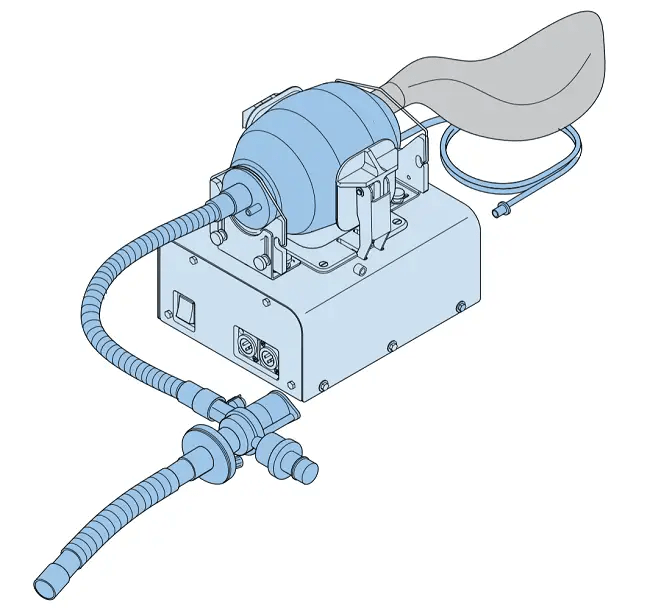
In the Netherlands, researchers developed the open-source VentilatorPAL respiratory ventilator, which costs a fraction of a conventional respirator and is certified.
VentilatorPAL offers a solution to the acute shortage of ventilators for COVID-19 patients worldwide. Interested parties can access files on the Free Breathing website and have the option to build their own ventilators.
M-Pesa by Safaricom
M-Pesa, a mobile money transfer service launched by Safaricom in Kenya, revolutionized how people in rural areas access financial services. Leveraging existing mobile infrastructure, M-Pesa made it possible for people to send and receive money using their mobile phones, even without a bank account.
Grameen Bank
Grameen Bank, founded by Muhammad Yunus, pioneered the concept of microfinance, providing small loans to entrepreneurs in rural areas of Bangladesh. This Jugaad innovation helped lift millions out of poverty and created sustainable businesses in the process.
GE Healthcare
GE Healthcare developed the MAC 400, a portable electrocardiogram (ECG) machine designed specifically for rural areas in developing countries. By simplifying the design and reducing costs, GE Healthcare was able to provide affordable healthcare solutions to underserved communities.
Procter & Gamble
Procter & Gamble launched the ‘Shiksha‘ campaign in India, aimed at providing education to underprivileged children. Instead of relying on traditional advertising methods, Procter & Gamble used low-cost media channels and leveraged partnerships with local NGOs to raise awareness and funds for the cause.
Aravind Eye Care System
The Aravind Eye Care System in India revolutionized the delivery of eye care services by implementing a high-volume, low-cost model. By optimizing processes, leveraging economies of scale, and using innovative surgical techniques, the Aravind Eye Care System was able to provide quality eye care services to millions at affordable prices.
Practical Guide: How to Implement Frugal Innovation in Your Organization
The transition toward a frugal model demands a profound re-engineering of the value chain, the leveraging of open-source technologies, and the fostering of an “open innovation” culture. In this ecosystem, synergy between academia and the private sector is vital for transferring technical knowledge into high-efficiency, low-cost solutions.
Recent research by Usman et al. (2023) underscores that the intelligent management of IT resources directly impacts the three dimensions of frugal success:
- Frugal Functionality (FF): Optimization of actual utility.
- Frugal Cost (FC): Drastic reduction of operating and capital expenditures.
- Frugal Ecosystem (FE): Strengthening of the collaborative network.
“Radical Simplification” Strategy: Steps for Action
To begin transforming your business model today, consider the following tactics:
- Critical Functionality Audit: Analyze product usage. Identify features that 80% of your customers do not use and eliminate them. Simplicity is your greatest asset for profitability.
- Alternative Materials Engineering: Evaluate replacing costly components with local, recycled, or low-environmental-impact inputs, thereby reducing dependence on complex global supply chains.
- Frugal Digitalization: Before investing in complex infrastructures, apply agile solutions. If a basic messaging service meets the customer’s need at 1% of the budget of a robust application, choose simplicity.
Business Pro-Tip: Frugal innovation is not exclusive to startups. Global corporations like Procter & Gamble have implemented “Frugal Marketing” strategies (such as the Shiksha campaign) to generate social value and brand loyalty in emerging markets using low-cost distribution and communication channels.
Challenges and Limitations: Overcoming Strategic Barriers
Despite its multifaceted benefits, implementing a frugal model entails intrinsic challenges that organizations must manage with precision to ensure long-term success.
- Scaling Constraints: Operating within a framework of limited resources acts as a catalyst for creativity but can also impose operational ceilings. The challenge lies in preventing frugality from limiting the scope of innovation or hindering the scalability necessary to compete in global markets.
- The Quality-Price Dilemma: A major technical challenge is the balance between affordability and excellence. Companies must execute rigorous quality controls to ensure solutions meet international standards and consumer expectations, avoiding the perception that “frugal” is synonymous with “low quality.”
- Cultural Resistance and Barriers: Frugal innovation demands a break from traditional design and management paradigms. This approach often faces resistance in rigid organizational cultures that prioritize massive investment over ingenious efficiency. Overcoming this bias requires transformative leadership.
- Positioning in Mature Markets: In markets where consumers are accustomed to over-engineered products and high price points, frugal innovation may face credibility barriers. The strategy here must focus on communicating the real value and robustness of the solution compared to conventional models.
Ultimately, while the obstacles are significant, organizations that successfully integrate frugality as a core competency not only overcome these challenges but also achieve a level of resilience unattainable by their traditional competitors.
Conclusion: Frugality as an Engine for Resilience and the Future
Frugal innovation has established itself as the definitive alternative for “maximizing value with minimum resources.” Far beyond a mere cost-reduction technique, this paradigm represents a strategic opportunity to develop disruptive products tailored to previously unreachable market segments.
Today, frugality is redefining global operations. By integrating principles of simplicity, affordability, sustainability, and agility, organizations not only optimize their profitability but also democratize access to essential solutions. Although the journey presents operational and cultural challenges, the benefits are indisputable: ranging from radical efficiency and expansion into new markets to solid leadership in environmental sustainability and sectoral competitiveness.
In a volatile and fast-paced global environment, frugal innovation ceases to be an option and becomes a competitive necessity. Now is the time to challenge the conventions of traditional design and transform limitations into catalysts for creativity. By adopting a frugal mindset and implementing these strategic solutions, your company will not only achieve extraordinary results but will lead the transition toward a more ethical, profitable, and resilient economy.
Frequently Asked Questions (FAQ)
What is the real difference between Frugal Innovation and Low-Cost Innovation?
Unlike the traditional low-cost model, which often sacrifices quality or ethics to reduce price, frugal innovation strives for “radical efficiency.” Its objective is to maintain—or even enhance—the robustness and social value of the product by stripping away only the superfluous to focus strictly on the essential.
Is frugal innovation only for developing countries?
No. Although it originated in emerging markets (such as the Jugaad concept in India), it is now a global trend. In developed countries, it is applied under the term “reverse innovation,” where solutions optimized in resource-constrained markets are re-imported to meet the demand for more sustainable and cost-effective products in Europe or the U.S. (Rasool et al., 2026).
How can Artificial Intelligence aid frugal innovation?
AI enables the processing of massive datasets to identify exactly which features users value, preventing expenditure on unnecessary characteristics. Furthermore, AI and IoT tools allow for real-time resource monitoring, drastically reducing operational costs and making complex solutions accessible in rural areas.
Is frugal innovation necessarily eco-friendly?
Yes, for the most part. By operating on the principle of “doing more with less,” it intrinsically reduces raw material consumption and waste generation. Recent studies confirm a direct correlation between frugal practices and the reduction of the corporate carbon footprint.
Which industries can apply this approach?
Practically all of them. While it is common in manufacturing and technology, sectors such as healthcare (simplified medical devices), education (low-data consumption platforms), and energy (solar microgrids) are currently the fastest-growing fields for the frugal model.
Where should a small business start to innovate frugally?
The first step is a functionality audit. Identify which processes or features of your service provide no real value to the customer while consuming resources. Adopting open-source technologies and collaborating with local communities are ideal starting points.
What is Jugaad?
It is an Indian term that refers to “an innovative fix or a creative workaround” born out of necessity and scarcity.
Can frugal innovation be applied to high-end technology?
Yes. The development of low-cost satellites and portable medical equipment are prime examples of high technology applied through a frugal lens.
Bibliographic References
Albert, M. (2022). Assessing the sustainability impacts of frugal innovation–A literature review. Journal of Cleaner Production, 365, 132754.
Corsini, L., Dammicco, V. and Moultrie, J. (2021), Frugal innovation in a crisis: the digital fabrication maker response to COVID-19. R&D Management, 51: 195-210. https://doi.org/10.1111/radm.12446
Dabić, M., Obradović, T., Vlačić, B., Sahasranamam, S., & Paul, J. (2022). Frugal innovations: A multidisciplinary review & agenda for future research. Journal of Business Research, 142, 914-929.
Delfa B. 2020. Innovación frugal: más con menos para un mundo mejor. The Conversation.
Escudero-Cipriani, C., García-del Junco, J., Chafloque-Céspedes, R., & Alvarez-Risco, A. (2024). Frugal innovation in the business environment: A literature review and future perspectives. Frontiers in Artificial Intelligence, 7, 1385522. https://doi.org/10.3389/frai.2024.1385522
Fischer, B., Guerrero, M., Guimón, J. and Schaeffer, P.R. (2021), “Knowledge transfer for frugal innovation: where do entrepreneurial universities stand?“, Journal of Knowledge Management, Vol. 25 No. 2, pp. 360-379. https://doi.org/10.1108/JKM-01-2020-0040
Gupta A. and H. Wang. 2009. Getting China and India Right: Strategies for Leveraging the World’s Fastest-Growing Economies for Global Advantage. Wiley.
Hossain M. 2020. Frugal innovation: Conception, development, diffusion, and outcome. Journal of Cleaner Production, Volume 262, 2020, 121456, ISSN 0959-6526,
https://doi.org/10.1016/j.jclepro.2020.121456.
Hossain, M., Park, S., & Shahid, S. (2023). Frugal innovation for sustainable rural development. Technological Forecasting and Social Change, 193, 122662. https://doi.org/10.1016/j.techfore.2023.122662
Khan, Rakhshanda. 2016. “How Frugal Innovation Promotes Social Sustainability” Sustainability 8, no. 10: 1034. https://doi.org/10.3390/su8101034
KOERICH, GRAZIELE VENTURA, & CANCELLIER, ÉVERTON LUÍS PELLIZZARO DE LORENZI. (2019). Frugal Innovation: origins, evolution and future perspectives. Cadernos EBAPE.BR, 17(4), 1079-1093. Epub January 20, 2020.https://doi.org/10.1590/1679-395174424x
Kusumawardhany, P. A., Baihaqi, I., & Karningsih, P. D. (2025). Frugal innovation framework for micro-entrepreneurs’ sustainable performance: From design thinking approach. Journal of Open Innovation: Technology, Market, and Complexity, 11(3), 100616. https://doi.org/10.1016/j.joitmc.2025.100616
Levänen, J., Hossain, M., & Wierenga, M. (2022). Frugal innovation in the midst of societal and operational pressures. Journal of Cleaner Production, 347, 131308.
Liu, Y., Fransen, J., De Jong, M., & Reins, L. (2025). From poverty alleviation to systemic change: A typology of frugal innovation and its contribution to the 3 pillars of sustainability. Journal of Cleaner Production, 523, 146462. https://doi.org/10.1016/j.jclepro.2025.146462
Merriam-Webster. (2016). Frugal. En Diccionario online Merriam-Webster. (11e ed.).
PAL, S. (2026). A production function approach with Indian JUGAAD perspective for Eastern World Countries. Journal of Innovation, Technology and Knowledge Economy, 2(1), 1–5. https://doi.org/10.65810/jitke.v2i1.2546
Pineda-Escobar MA (2025), “How to identify frugal innovation: make it relative and contextual“. International Journal of Innovation Science, Vol. ahead-of-print No. ahead-of-print. https://doi.org/10.1108/IJIS-06-2024-0174
Prabhu J. 2017. Frugal innovation: doing more with less for more. Phil. Trans. R. Soc. A 375: 20160372. http://dx.doi.org/10.1098/rsta.2016.0372
Prathap, G. 2014. The myth of frugal innovation in India. Current Science, 106(3), 374-377.
Qin, W. (2024). How to unleash frugal innovation through internet of things and artificial intelligence: Moderating role of entrepreneurial knowledge and future challenges. Technological Forecasting and Social Change, 202, 123286. https://doi.org/10.1016/j.techfore.2024.123286
Radjou N., J. Prabhu, S. Ahuja. 2012. Jugaad Innovation: Think Frugal, Be Flexible, Generate Breakthrough Growth.
Radjou N. and J. Prabhu. 2013. Frugal Innovation: A New Business Paradigm. INSEAD Knowledge.
Rasool, F., Navarro-Castillo, Y., Morales-Alonso, G., & Hidalgo, A. (2026). Innovating across borders: Insights from frugal and reverse innovation research. International Journal of Innovation Studies. https://doi.org/10.1016/j.ijis.2026.01.002
Shahid, M. S., Hossain, M., Shahid, S., & Anwar, T. (2023). Frugal innovation as a source of sustainable entrepreneurship to tackle social and environmental challenges. Journal of Cleaner Production, 406, 137050. https://doi.org/10.1016/j.jclepro.2023.137050
Usman Shehzad M, Zhang J, Le PB, Jamil K, Cao Z (2023), “Stimulating frugal innovation via information technology resources, knowledge sources and market turbulence: a mediation-moderation approach“. European Journal of Innovation Management, Vol. 26 No. 4 pp. 1071–1105, doi: https://doi.org/10.1108/EJIM-08-2021-0382
Weyrauch T. and C. Herstatt. 2016. What is frugal innovation? Three defining criteria. Weyrauch and Herstatt Journal of Frugal Innovation (2016) 2:1
DOI 10.1186/s40669-016-0005-y

Editor and founder of “Innovar o Morir” (‘Innovate or Die’). Milthon holds a Master’s degree in Science and Innovation Management from the Polytechnic University of Valencia, with postgraduate diplomas in Business Innovation (UPV) and Market-Oriented Innovation Management (UPCH-Universitat Leipzig). He has practical experience in innovation management, having led the Fisheries Innovation Unit of the National Program for Innovation in Fisheries and Aquaculture (PNIPA) and worked as a consultant on open innovation diagnostics and technology watch. He firmly believes in the power of innovation and creativity as drivers of change and development.